Showing posts with label Archery. Show all posts

Tuesday, January 17, 2017

Bowhunter bags record-breaking elk in Montana


Most hunters get cagey when asked where they got their trophy elk, but Steve Felix doesn’t balk.
“This was killed on public land,” said the potential owner of the newest world record for typical American elk taken by archery. “It’s a testament to great habitat and great management and the importance of public lands.”
To be a little more specific, Felix brought down the 7x8-point bull in Powder River County, in the southeast corner of Montana. The Boone and Crockett Club has confirmed its rack scores 430 inches, making it the largest elk taken in the state and the fourth-largest ever recorded in the club’s records. No. 1 scored 442 5/8ths, and No. 2 and No. 3 were both taken before 1900 – all with rifles. The current world-record archery kill scored 412 1/8, taken in 2005 in Arizona.
“History was made right here in Montana,” said Justin Spring, records director at Missoula-based Boone and Crockett. “It’s a milestone in the success of our commitment to this iconic species. Animals of this size do not happen by chance. It takes the combined commitment of wildlife managers and biologists, landowners, sportsmen and above all else, it takes the best habitats we can set aside for elk in elk country.”
Felix, who lives near Seeley Lake, made the eight-hour drive to his hunting area solo in September when his regular hunting partner couldn’t get away for the weekend. He spotted the bull early in the morning, and spent about an hour stalking it to get a shooting position.
A single arrow at 61 yards brought the elk down 30 seconds after he shot it. Approaching, Felix said he knew he had bagged the biggest animal he’d ever pursued. But he wasn’t sure how big.
It took five backpack loads over two days to bring out the meat. At first, Felix hoped to bring out the antlers and skin in a single load.
“I got about 60 yards and said this is not going to work,” he said. “It was just too heavy.”
He stopped at the Cabela’s store in Billings to compare his bull to some of the trophies hanging there.
“They had a rack that scored 400 there, so I took a quick look,” he said. “Then I went back out to my truck and went, ‘Oh, boy.’”

Realizing he had a contender on his hands, Felix next stopped at John Berger’s taxidermy shop in Bozeman. After a preliminary measurement hinted the bull was in striking distance of a world record, they called Fred King, an expert trophy grader in the Gallatin Valley. In its fresh, “green” state, the antlers scored 440 inches. Montana’s existing record was 412 inches.
Antlers shrink a bit as they dry. After 60 days, the final measurement totaled a net 430 inches. A final, official score for Pope and Young Club World's Record status will occur before a panel scored by a group of highly qualified P&Y and B&C measurers just prior to Pope and Young Club's Biennial Convention and Big Game Awards Ceremony April 5-8, 2017, in St. Louis, Missouri.
Felix said the hunting district doesn’t have a trophy restriction like the popular Missouri Breaks or Elkhorn Mountain regions of Montana. But it did have great grass, healthy wildlife and public opportunity.
“I’ve spent a lot of time in that country,” Felix said. “The first eight days I was there, I never saw an elk. That was the first arrow either my partner or I have ever shot there for elk.”

Sunday, August 28, 2016

How to Choose Locations of Your Deer Hunting Blinds/Treestands,and When to Hunt Them

 As I said in my last deer hunting post,there is no substitute for boot leather in the field,you have to get out there and scout,you have to locate bedding areas,water sources, food sources,and deer trails.
You also have to plan ahead because ag fields get harvested,and the summer/early fall food sources change. What deer are feeding on now,and in the opening weeks of bow season will change as soon as local ag fields are harvested.
Once acorns drop-that's the primary food source,deer will eat white oak acorns above all other foods in fall. Apples are a close second. In NE Ohio,the crabapple becomes a food source when other foods aren't available.
When you pick your stand/blind sites,you have to consider multiple things,first are bedding areas and water sources,then food sources,then comes trails leading to and from these areas.
You have to be able to get to your stand/blind without spooking bedding deer,there are two ways of doing this,first is to get to your blind long before deer return to the bedding area-which means in the dark,at least an hour before legal shooting light.
Second is to locate your blind/stand far enough away from the bedding areas,that you don't spook deer.
This approach is best for afternoon/evening hunts,as the idea is to catch the deer leaving their bedding areas to drink water and feed.
You may have to go to your blind on one trail,and leave on another to avoid spooking deer-figure this out now.
It's best to pick several sites,so you can hunt no matter which way the wind is blowing.
If you are hunting on a ridgeline/rise in the land,remember that in the morning,as it warms up,air moves from low to high,it does the opposite in the evening,so pay close attention to the wind direction,if it's parallel to the ridge/rise it's okay to hunt,if the wind is blowing at your back-pick another place to hunt,wind in your face means the wind will carry your scent over the ridge,and it will go to the bottom behind you,and not the bottom if front of you,so you're good to hunt that site.
Same with any other blind site-keep the wind in you're face,so it's carrying you're scent away from any approaching deer.
  While you are hiking through the woods now and in early Sept,take binoculars with you,and scan the tops and branches of the oak trees,find a few with more acorns than the rest,and use these trees to set up your stand/blind near.
Another great stand/blind location is what is known as edge cover- the brushy areas between woods and fields. This is where bucks make rubs year after year,look around and you should be able to spot last year's rubs. If there's a lot-put a stand/blind near the edge cover,preferably just inside the woods,where there are known buck trails.
Locate another stand right on the field edge,pick a spot where there's a few small trees with branches about the height of a deer's head,then pick a couple more so you can hunt the edge cover from either the field side or the woods side in any wind direction.
Once you've got your blind/stand sites picked out- take a small rake,a folding saw,and a pair of hand pruners with you into the woods. Clear any branches that you would brush against,or snag your pack,bow,or clothing on. then rake the leaves and debris from the trail. You'll have to do it again after the leaves drop,but it's much easier to rake the leaves away if you've already cleared your trails.
Do this now,or real soon,as deer notice changes in the woods.

Starting the last week of October,make a two or three fake scrape lines,pick small trees with a branch the bucks can reach that's toward the open area/field.
Rake away all the dead grasses,leaves and debris in about a 3' semi-circle under the trees,use a stick,or old deer antler to make marks in the dirt like a deer was scraping it's antlers to clear debris from the scrape.
Make a line of these,4-6 to a line,and either use a scent like Active Scrape,or drink a lot of water before you head into the woods and piss in the scrapes yourself-I've done it for years,and it works just fine.
Starting the last week of October/first week of November,hunt the scrape lines every evening hunt.
I'll start hanging scent wicks with doe in estrous scent near the scrape lines starting the first week of November. I do not leave them out-I use bottles with a wick that can be re-capped and reused all season,you just have to add more estrous urine every so often.
These are what I use...
Tink's reusable scent bottles
The whitetail rut in NE Ohio hit's the peak around the 15th of November every year,breeding starts around the first of November. This is when you want to hunt for a big buck,if that's what you're after.
The last week of Oct. until the last week of Nov. is the time to rattle and use a grunt tube and estrous bleat call.
 Pay attention to the rut,because any does not bred in Nov. will cycle back into estrous 28 days later-in Dec. then in Jan. there's a much smaller period of breeding.
I'll do a post on rattling and using grunt tubes doe and fawn bleats and estrous bleats before the rut hits.
The guys who get a deer every year are the guys who get out there and scout,get their hunting spots picked out/set up long before the rut hits,and stay in their blind/stand once they get to it.
So get out there,find your stand/blind sites,get your shooting lanes cut now,clear your trails to and from your blinds now and you'll be way ahead of most deer hunters.


Saturday, August 27, 2016

Deer Archery Season Less Than a Month Away in Ohio- Some Deer Hunting Basics

First-
Now's the time to step up your target practice.
I go from my 18-36 arrows a day all summer,to shooting 36 arrows twice a day,morning and close to last  legal shooting light,which is one half hour after sunset here in Ohio.
You have to go by the ODNR's sunrise-sunset tables-not other sources,their tables are the legal hunting times,if you use the times in the newspaper,or online sources,then you may be off by several minutes.
That could lead to large fines and/or suspension of hunting license/right to hunt.
Plus,if your hunting privileges are suspended in Ohio-they are also suspended in the rest of the U.S. except for two states-New Jersey and Nebrasaka- due to the Interstate Wildlife Violater Compact
 Your blind or stand should be already set up if you hunt private land,shooting lanes cut,and blind/stand "brushed in" using the branches you trimmed for your shooting lanes.
Now is also the time to start putting out corn if you feed the deer where you hunt.
You should have had mineral blocks out since early spring,as it helps with antler growth,and provides deer nutrients that are lacking in the natural foods available.
I keep blocks out all year,in spring I put out one of the "rack rock" type blocks made for antler growth. In fall,I put out apple,sugar beet, and acorn scented blocks. Once the rut is over,I add blocks as needed,but switch to stockman's blocks available at your local feed store-or farm supply,Tractor Supply,etc. This helps provide the newly pregnant does with a boost in nutrients.
If you put out corn,and don't use a feeder,spread it out,rather than make one big pile,as it will help prevent deer from passing diseases to other deer when spread out. If you just dump corn in a big pile,the deer can transmit diseases to other deer.
I hunt a 70 acre or so private property,and we do mange the deer as much as possible,which is why we put out food and mineral blocks. Over the years,there have been some monster sized deer taken there,both in body size,and antler size. There's only 4 people who regularly hunt the property,and another 4 guys we let hunt gun season. Usually it's no more than 4 people hunting on any given day of the season.
The property is surrounded by ag fields-most years it's about half corn,half soybeans-this year for some reason,it's all soybeans.
That's good for us-the beans will be off the fields before the rut kicks in,and there will be no standing corn during gun season.
I also put out apples from the time they start dropping off the trees,up until the end of muzzleloader season in Jan. since I get them for free from a neighbor. If you have local apple orchards,ask the owners,they'll usually give you extra or bruised,wormy,etc apples for free or a really reduced price.
I freeze a bunch for use later in the season,the deer still eat them,and when there's snow on the ground,some apples spread around 30 yards or so from your blind will draw hungry deer in from all over the area.
 I hunt a lot on public land,where you can't put out any kind of bait,no corn,no apples,no mineral blocks.
No big deal,deer travel the same trails all the time,the key to finding deer on public land is to find the major trails,then find the bedding areas,the water sources,and the food sources. Deer have to drink water at least twice a day,usually soon after they move from their beds,and again after feeding.
When you find the trails,anywhere from 5-15 yards from the main trails-you will find smaller,less used trails.
These are the older buck's trails,yearling bucks usually still travel with the does up until the rut begins.
Find a spot near a water source,a food source,or on the trail the deer use to get to the bedding areas.
Deer feed all night during hunting season,if you set up near a bedding area,and are trying to get a deer heading to bed-you have to be able to get to your blind long before first light,and do it without spooking deer.
I usually use the opposite approach-I set up far enough away from the bedding area that I can get to me blind any time during the day,and try to get the deer as they move out of the bedding area.
If you find the food source,pick a spot that's either still back in the woods a little,or right at the edge of a field.
When there's a lot of acorns on the ground,deer aren't going to eat much of anything else,so concentrate on water sources and trails to and from bedding areas.
The single most important thing you can do is get out in the woods,and see what the deer are doing where you hunt,there's no substitute for scouting-none.
I don't use trail cameras,because unless you own a huge farm/property,and have dozens of cameras,all you'll find out is where the deer were,not where they are,where they're going,what they're eating,where they're bedding-which are the things you need to know to be where the deer will be after you get in your stand/blind.
You have to pay close attention to wind direction-and have more than one stand or blind set up so you have another choice if the wind is not blowing towards your stand or blind. I have 4 locations,so I'm covered every day I hunt. The public land that I hunt-I also hunt different spots when the wind is from different directions. The best public land was hit with a severe EHD outbreak in 2012,we didn't see a single deer hunting that gun season at the Ladue public hunting area,and we hunted it for 5 days. This year should be good there,as the 2013 fawns will be 3 1/2 now,2014 fawns 2 1/2. Next year will probably be better at Ladue,as there should be plenty of 3 1/2 and 4 1/2 year old bucks.
I'll probably hunt there at least 2 days of gun season this year,just to see what the deer numbers are like.
Deer can smell you from a long ways off,unless you are hunting in an area where they are used to people-like the suburbs-they aren't going to come within bow range if they smell you.
Use the wind to your advantage,I also will take a trash bag into the wods with me a couple weeks before hunting season,and pack it full of leaves and twigs from the area I'm going to hunt.
Then I put the leaves into paper bags,and put them in plastic bins with all my hunting gear.
I've been doing this for years-it works,I've had deer walk right by me when I'm in an ground blind and the wind shifted so it was blowing at my back-and they still didn't smell me.
I don't use the scent control clothing or products-my method has worked just fine for over 40 years-why change it now?
I would rather spend the $$$ I save by not paying extra for scent control clothing and products on new broadheads,arrows,and crossbow bolts.
Wear camo that matches your surroundings-wearing solid earth tone colors is better than wearing something like woodland camo in Ohio in November.
Either wear some kind of face mask,or use camo face paint-deer recognize the shape of a human face-so hide your face.
Don't hike around the woods during the day once deer season starts-stay put. As long as you picked a good location,the deer will come to you. If you are hunting public land,there's enough people moving in and out of the woods  to push deer right to you,another reason to sit still,stay in your blind.
 Pack enough snacks plus a lunch,bring plenty of water,and if you're like me-pack a thermos of coffee.
Make sure you have some surgical gloves,hand soap-I use an empty one of the 99 cents at the qucikie mart hand sanitizer bottles filed with Dial antibacterial hand soap-plus hand sanitizer,and a towel/washcloth to wash your hands after to field dress your deer.
Either buy a deer drag,or make your own-I just use an 18" piece of 3/4" oak dowel rod that I tie my rope to,makes it much easier to drag the deer.

Ohio deer hunting regs/info...


White-tailed Deer Hunting

Species Opening Date Closing Date Daily Bag Limit
Archery September 24, 2016 February 5, 2017 The statewide bag limit is six deer. Only one may be antlered. You cannot exceed an individual county bag limit .

Refer to the Deer Hunting Section for details on zone and bag limits.
Deer Youth Gun November 19, 2016 November 20, 2016
Gun November 28, 2016 December 4, 2016
December 17, 2016 December 18, 2016
Muzzleloader January 7, 2017 January 10, 2017


The statewide bag limit is six deer. Only one may be antlered. You cannot exceed an individual county bag limit.
No more than two deer may be taken from a two deer county during the 2016-2017 deer hunting season. Both deer need to be tagged with an either-sex permit. The antlerless permit is not valid in a two deer county.
No more than three deer may be taken from a three deer county during the 2016-2017 deer hunting season. The antlerless permit is not valid in most three deer counties. Check the antlerless permit map on this page to determine if the antlerless permit is valid in the county where you hunt. One deer may be tagged with an antlerless permit in specific three deer counties, and two deer may be tagged with either-sex permits. The antlerless permit is not valid in specific counties after Nov. 27, 2016. Three deer may be tagged with either-sex permits if the antlerless permit is not valid or not used.
No more than four deer may be taken from a four deer county during the 2016-2017 deer hunting season. One deer may be tagged with an antlerless permit and three deer may be tagged with an either-sex permit. The antlerless permit is not valid in specific counties after Nov. 27, 2016. Four deer may be tagged with either-sex permits if the antlerless permit is not used.
Two Deer County
Three Deer County
Three Deer County
Four Deer County
A hunter may kill no more than two deer in a two deer county during the 2016-2017 season.
A hunter may kill no more than three deer in a three deer county during the 2016-2017 season.
A hunter may kill no more than four deer in a four deer county during the 2016-2017 season.
Up to two either-sex permits.
Up to three either-sex permits.
Up to two either-sex permits and one antlerless permit.
- OR -
Up to three either-sex permits.
Up to three either-sex permits and one antlerless permit.
- OR -
Up to four either-sex permits.
 
Antlerless permits are NOT valid.


I'll do a post on stand/blind site selection in the next day or two.
If you haven't been out in the woods yet,get out there,boot leather in the woods and fields equals venison in the freezer.

Ladue should have decent deer hunting this year for those of you around here...


LaDue Public Hunting Area

More info on Ladue here


Tuesday, January 26, 2016

Female Bow Hunter Receives Death Threats

Why Was this Bow Hunter Threatened for Teaching Kids How to Hunt?


The anti-hunting crowd has once again proven that they are far more violent than the hunters they seem to hate so much.
Jen “The Archer” Cordaro, a prominent, female bow hunter from California revealed in a recent interview that she has received death threats after teaching children how to hunt.
“The initial reaction to the ‘Bring a Kid’ campaign actually was all positive,” said Cordaro on The Palin Update with Kevin Scholla. “I have more letters from kids than I can keep up with.”
However, it wasn’t long before the anti-hunting crowd found out about the campaign and the usual violent, hate filled threats followed shortly thereafter.

“People want to murder my first born child,” Cordaro said. “I don’t have any kids, but that’s pretty scary to think about.”
“What I really haven’t talked to the media about at all is the things that are happening at my home and my place of employment,” said Cordaro. “So the death threats and the harassment and vandalism has gone beyond social media at this point. I’m dealing with it every day in my mailbox, at my house, on my car, at my work. Because they’re very close to home the proper authorities are involved at this point … I’m not stopping. There’s no reason for me to stop. If I stop they win.”

Source
*** This was written in Feb. 2015,and I had saved to post last year,but just now found it again.
It's still relevant,as it points out the evil sh*t anti-hunting zealots do.

Sunday, December 27, 2015

Ohio Deer Harvest

According to the ODNR,the 2015-2016 deer season harvest is up slightly...
Up by 3,742 over last year,however,the deer season was changed,there was no
Oct. doe only muzzleloader season
plus there's an extra two days of gun season,tomorrow and Tues.
The muzzleloader season is a week later than last year as well.
Jan. 9th-12th is this year's muzzleloader season.
We hunted 5 of the 7 days of gun season,and never saw a deer in gun range.
We hunt in Ashland county,the harvest there is almost the same as last year,
there's an eight deer difference.
The ODNR apparently listened to us hunters at the meetings they held last year,
when we said there were way too many does being harvested,and deer numbers
were way down from the year before,and have been dropping for the years-as
antlerless permits were only sold in ten counties.

2015/16 Deer Harvest Totals

The 2013/14 and 2014/15 deer harvest totals here

There's still plenty of time to get a deer,and get some venison in your freezer,
we have the 2 days of gun season,the four days of muzzeloader season,
and the archery season is open 'till Feb 7th.
What's important to deer now is food and cover,they need more food because
 it's colder,and the bucks are still recovering from the rut.
For morning hunts,set up so you can catch the deer coming back to the
bedding area,for evening hunts,set up so you catch them going from
bedding area to food source. If there's a water source  between the bedding
 area and the food source-that's the perfect spot ot set up-as the deer will
drink water on their way to the food source and on their way back to the bedding area.

Read.
Learn.
Train.
Do more PT.


Saturday, September 12, 2015

Making Fake Scrape Lines to Get Big Bucks

I wrote about this last year Here and Here and Here
*since I wrote those posts last year,I’ve seen 8-10 bucks raking antlers on branches above their scrapes-was too busy hunting to write up a new post on the subject during last year’s rut.*
I’m putting lots of hunting info up long before deer season gets underway.
It’s now September 12th-Ohio’s archery season for deer starts on September 26th-that’s two weeks away people-get out there and get set up,only a month or so away from the time to be making fake scrape lines-so read up on it…
Via Field & Stream Here
Minnesota whitetail nut Billy Jerowski is a fair-minded, modern husband—one whose manhood isn’t threatened by doing dishes or hanging laundry. But he never imagined his domestic experience would improve his deer hunting. That is until after he’d been watching numerous bucks work scrapes, when it dawned on him that the licking branch doesn’t have to be parallel to the ground. “I realized that bucks love getting their antlers up into anything—a deadfall or a vine—whether it hangs vertically or horizontally,” he says. “That got me to thinking.”
The Scrape Line
Always ready to experiment, Jerowski drove to his hunting area and strung a wire tightly between two trees, like a clothesline. To this wire, he hung short lengths of rope, a green tree branch, even a section of grapevine. “I roughed up some dirt below the wire to start the scrape,” he says. “But I doubt I needed to. The bucks just hammered those overhanging ‘branches.’ When I came back to check my experiment, the little scrapes I started under each had been hit so many times they’d melded into one giant scrape.”
Jerowski feels his technique trumps the standard mock scrape for several reasons. “First, I can put it wherever I need it—no need to find the right tree, with the perfect overhanging branch,” he says. Second, hanging several different “branch” materials seems to ensure that a buck will become interested in at least one. “Bucks are curious, and once one starts getting his antlers up into one branch and pawing the ground, it isn’t long before other bucks are in on the action, and hitting all of them.”
Hang Tight
When it comes to constructing this mock scrape line, the keys are “tight and strong,” says Jerowski. Bucks can pull down a light line easily, so use strong wire, cable, or a stout rope. Stretch it tightly between two trees, and tie it securely. “To attach the hanging vines or branches, I use zip-ties and I make sure they’re cinched down tight or bucks will pull them off,” he says. “You can scrape up the ground to get bucks started, but I don’t think it’s necessary. Once they start working those hanging ‘branches,’ the scraping comes naturally. In a couple of weeks you’ll have a super scrape right where you need it to be.”

Sit Tight

Where you hang your “scrape line” should be determined by the best possible stand location. Start by picking a tree that offers a good combination of cover and shooting lanes. Then look for another similarly good stand tree nearby that will allow you to hunt a totally different wind. If you position your mock scrape line so you can shoot to it from either tree, you’ll have a buck magnet you can hunt in almost any breeze, and one that’ll stay hot right through the start of the rut.
Read.
Learn.
Train.
Do more PT !

Start Shooting More Arrows-and More-Archery Deer Season is Only Two Weeks Away

Ohio’s archery season starts in two weeks.
That means you’ve only got two weeks left to target shoot.
You should be shooting at first and last light as much as possible,and wearing the clothes you will wear hunting.
Get out in the woods,check your stand/blind set-ups-you picked your stand/blind locations and cut shooting lanes back in August right?
You already cleared debris and sticks/branches from the trails to your blind/stands right?
You already know the distances to the most likely areas the deer will approach from right?
You can already put all 6 arrows into 6″ or less from those distances,right?
You already know where all the food and water sources and bedding areas are in relation to your stands/blinds,right?
You know what stands/blinds to hunt depending on wind direction right?
You know which stands/blinds you can NOT hunt in early morning or late evening because the sun will be in your eyes,right?
Where it’s legal,you already have salt/mineral blocks out right?

Where it’s legal,you have corn in feeders already setup and filled,right?
You already planted fall/winter food plots with a variety of grains and brassicas right?
You already washed all your hunting clothing and let them hang outside for a day,right?
Then you put said clothing in a clean plastic bin(s) with some pine cones,and pine,oak, or cedar branches in several small paper bags spread out among the clothes in the bin(s),right?
Your early-season hunting boots are in the same bin,right? Already waterproofed and aired out for a few days,right?
Your day pack is in the same bin(s) too,right?And your rain gear?
Got a map of the area you plan to hunt,a compass,fire starting kit,first aid kit, etc. in your day pack right?
Along with all the stuff I wrote about last year in this post,right?
If for whatever reason,you made a bad shot on a deer,you do know how to track a wounded deer,right? If not,read this I wrote that last year also.
You know how to process your deer like I wrote about Here, and Here ,right?

Get out in the woods-scout your hunting area,find all the deer trails,water and food sources,bedding areas,and the trails between bedding area and water source,food source and water source,food source,water source and bedding areas. Pay attention to what the deer eat at what time of year,plant winter food plots where legal-and you’ll have a shot at a late season buck as his body is seriously nutrient depleted  from the rut,and he’ll be drawn to high quality food after the rut has ended. The same food plot will attract does as well,so you have no excuse for not filling your freezer with venison this year !
If you want the local deer herd to remain at optimum numbers of deer-shoot every coyote you see during deer season-shoot enough of them,and the furs will cover your hunting costs for the year!
Fewer ‘yotes mean more deer,studies have shown coyote predation can kill up to 90% of whitetail fawns in areas with a lot of ‘yotes-eastern coyotes are an invasive species,as such,they need to be extirpated.
If there are feral hogs in your area-shoot every one of those you see as well-they eat many of the same foods deer eat.
Feral hogs are an invasive species as well-extirpate them-look at them as bacon on the hoof !
Get out in the woods,get your blinds/stands ready,clear debris from trails you use to and from your blinds/stands-shoot arrows every day,make sure your broadheads are razor sharp,use a safety harness if you hunt from a treestand!

Hunt safely,hunt smart,know your quarry’s habits-if you want to take a big buck,you have to get out in the woods and work for it-it ain’t like the hunting shows on the tee-vee!
Read.
Learn.
Train.
Do more PT!

Wednesday, January 21, 2015

Ga. Study On Coyotes Aims To Help Deer Fawns Survive

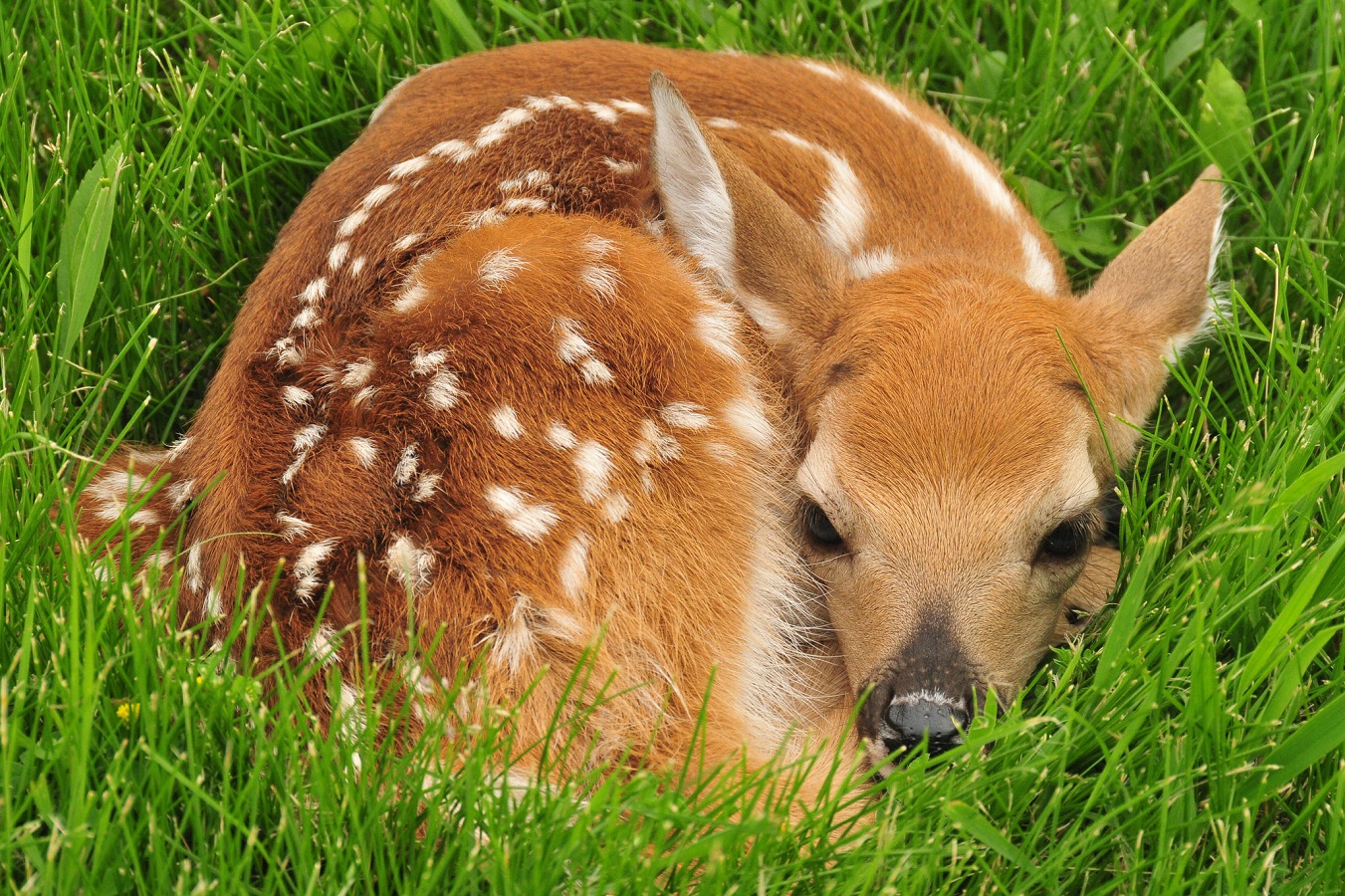
White-tailed deer fawns, by their youth and size, are an easy target for most coyotes.
Researchers in Georgia, Alabama and South Carolina hope to figure out how to protect the fawn, to some extent, by studying coyote behavior.
“We would potentially try to see if we could make alterations to the environment to change how coyotes are behaving thereby influencing the probability that they will prey on fawns,” says Dr. Michael Chamberlain, a professor of Wildlife Ecology at the University of Georgia.


Chamberlain says the coyotes are seriously threatening the fawns in the Southeast.  Starting next week, researchers will trap, tag and monitor the coyotes over the next two years throughout the three states.
Coyotes pose a serious threat to white-tailed deer fawns says Dr. Michael Chamberlain, a professor of Wildlife Ecology at the University of Georgia.
Credit USFWS Mountain-Prairie / Flickr.com/usfwsmtnprairie
“Ultimately can we take that information and manipulate the landscape to influence coyote behavior, thereby influencing their impacts on their prey,” says Chamberlain.
The coyotes will not be harmed during the trapping and tagging process.
DNA samples will also be studied to help determine colonization routes.

http://wabe.org/post/ga-study-coyotes-aims-help-deer-fawns-survive

Friday, January 9, 2015

In Some Parts, It’s Prime Time for Big Bucks


Overall activity status: The rut is on in Mississippi, Alabama, and eastern Louisiana, and deer movement is great. The exact rut peak varies depending on the area of each state, but it’s close in most of these states, and good bucks are being seen and killed.
How good? The buck above was taken in Jefferson County, Mississippi last week by Matt Moss. A medical student at LSU-Shreveport Medical School, Matt left his home in St. Charles for some hunting during his holiday break on a lease that he shares with his twin brother Brent and friend Kyle Bennett. He chose a stand that he had not hunted before but had a good history. The two-man ladder stand overlooked a clover food plot. The first visitors to the plot were a flock of turkeys. At 4 p.m. he heard leaves rustling and saw a buck with a crazy rack 50 yards away on the edge of the field.
It was a mature buck checking the field for hot does, which weren’t there, and the buck turned around to leave. Moss found an opening in the brush and took the 40-yard shot with his .45-70. With his brother Brent, they followed a short blood trail and were stunned to see the rack on the buck. The 18-pointer has numerous sticker points and a 25-inch extra main beam, and scores 216 inches Boone & Crockett—making it a likely a top ten non-typical buck from the Magnolia State.
Fighting: Bucks in Alabama, Mississippi, and eastern Louisiana are looking for and competing for hot does now, so a fight is likely to break out anytime two bucks encounter each other.
Rub making: Some rubs are being made now, but most bucks are on the move for does and only occasionally stopping to make a rub here and there before moving on.
Scrape making: Scott Perrodin from Louisiana reports that he’s still seeing plenty of scrapes. There should be many scrapes in rut areas, but don’t count on too many bucks tending them, as most are looking for or chasing does.

Chasing: Chasing is going on in many areas, including the Three Rivers WMA in Louisiana. Josh Perrodin (Scott’s nephew) from Bayou Chicot, Louisiana, spotted this stout 165-pound eight-pointer chasing a doe on January 6 and promptly put it down at 12:30 in the afternoon.
Daytime movement: The bone-chilling temperatures have deer moving and hunters shivering. Temperatures have been in the teens across the South, and that, along with the rut, has deer moving well. As Josh Perrodin can verify, bucks will be on the move at any time, and the more you spend in your stand the better your odds of seeing one will be.


Friday, November 21, 2014

N.E. Ohio Whitetail Rut Winding Down

Rut activity appears to be slowing down a lot. In most years,in NE Ohio,the peak of the rut falls the second week of November. More deer are bred on or within a day or two of November 15th than at any other time during the rut.
That doesn't mean the rut is over-far from it-what it means is that the peak has passed. Deer are still being bred,does are still coming into estrous,and bucks are still trying to breed them.
The does that are in estrous are either being "tended" by a buck right now- have a buck following them everywhere,never leaving the doe's side-or have a buck-or bucks- following them. The majority of does who still have not come into estrous are going to do so this week.

Read more @

http://starvinlarry.com/2014/11/22/n-e-ohio-whitetail-rut-winding-down/

Friday, November 7, 2014

Whitetail Deer Tip: Follow the Breeder Track an estrous doe and you'll have bucks in your pocket


Photo by Donald M. Jones
When fresh snow falls overnight, most big-woods hunters are out at first light looking for the track of a trophy buck to follow. That’s a good early-morning strategy. But if you can find and follow the right doe trail, big bucks will actually come to you.
Lady = Luck
An estrous doe, including any late-cycling female coming into heat a month after the primary rut, makes every effort to attract amorous bucks. She may stay on her feet all day, lingering near scrape lines, milling along edges, and feeding in openings where she’ll be seen easily. In short, she’s a buck magnet. Get close and you can tap her drawing power.
But first, you have to get on the right track. When you find doe prints, follow them and watch for rose-colored urine stains in the snow. This is a dead giveaway that she’s in heat. Also, look to either side for the tracks of a flanking buck or two. If she’s close but not quite ready to stand, bucks will zigzag her trail like skiers running a slalom course, each using his eyes, ears, and nose to keep tabs on her exact whereabouts. You can’t miss it.
The Solo Doe
When you find only the rose-colored stains, and it’s clear the doe hasn’t caught the attention of a buck yet, follow her trail, being careful not to spook her. And keep an eye on the flanks. Eventually, a passing buck is apt to spot her, move in to check out her breeding status, and give you a shot.
Should you spook the curious buck, let him go, allow things to calm down, and get back on the doe’s trail. Sooner or later, the buck will circle around and try to intercept her, or she may attract another suitor in the meantime.

Read more at...

http://www.fieldandstream.com/articles/hunting/2014/11/whitetail-deer-tip-follow-the-breeder?cmpid=enews110714b&spPodID=020&spMailingID=7268701&spUserID=NjI2NzA0MjQyMzcS1&spJobID=560719208&spReportId=NTYwNzE5MjA4S0

Sunday, November 2, 2014

Chronic Wasting Disease Confirmed in Ohio on Private Preserve

REYNOLDSBURG, OHIO – The Ohio Department of Agriculture (ODA) and the Ohio Department of Natural Resources (ODNR) today confirmed the first positive case of Chronic Wasting Disease (CWD) in the state in a captive deer herd in Holmes County. The state continues to take quarantine action to control the further spread of the disease. There is no evidence that CWD has affected the wild deer population in the state.
The positive sample was taken from a single buck on a hunting preserve in Millersburg and tested as part of Ohio’s CWD monitoring program for captive white-tailed deer operations. The preserve had been under quarantine since April 24, 2014, and was subject to intensive monitoring and sampling protocols because of a known connection to a captive deer operation in Pennsylvania that tested positive for CWD earlier this year. The quarantine will remain enforced until the state is satisfied that disease transference can no longer occur.

http://outdoornewsdaily.com/chronic-wasting-disease-confirmed-in-ohio-on-private-preserve/

Friday, September 12, 2014

More Deer Hunting Tips

What a buck’s tail can tell you about his behavior-from F&S magazine.


Avoid wearing blues and solid green clothing.
“Basically, whitetails are sensitive to blues and greens, and less so to reds and oranges.”

 http://starvinlarry.com/2014/09/12/deer-hunting-tips/