As I said in my last deer hunting post,there is no substitute for boot leather in the field,you have to get out there and scout,you have to locate bedding areas,water sources, food sources,and deer trails.
You also have to plan ahead because ag fields get harvested,and the summer/early fall food sources change. What deer are feeding on now,and in the opening weeks of bow season will change as soon as local ag fields are harvested.
Once acorns drop-that's the primary food source,deer will eat white oak acorns above all other foods in fall. Apples are a close second. In NE Ohio,the crabapple becomes a food source when other foods aren't available.
When you pick your stand/blind sites,you have to consider multiple things,first are bedding areas and water sources,then food sources,then comes trails leading to and from these areas.
You have to be able to get to your stand/blind without spooking bedding deer,there are two ways of doing this,first is to get to your blind long before deer return to the bedding area-which means in the dark,at least an hour before legal shooting light.
Second is to locate your blind/stand far enough away from the bedding areas,that you don't spook deer.
This approach is best for afternoon/evening hunts,as the idea is to catch the deer leaving their bedding areas to drink water and feed.
You may have to go to your blind on one trail,and leave on another to avoid spooking deer-figure this out now.
It's best to pick several sites,so you can hunt no matter which way the wind is blowing.
If you are hunting on a ridgeline/rise in the land,remember that in the morning,as it warms up,air moves from low to high,it does the opposite in the evening,so pay close attention to the wind direction,if it's parallel to the ridge/rise it's okay to hunt,if the wind is blowing at your back-pick another place to hunt,wind in your face means the wind will carry your scent over the ridge,and it will go to the bottom behind you,and not the bottom if front of you,so you're good to hunt that site.
Same with any other blind site-keep the wind in you're face,so it's carrying you're scent away from any approaching deer.
While you are hiking through the woods now and in early Sept,take binoculars with you,and scan the tops and branches of the oak trees,find a few with more acorns than the rest,and use these trees to set up your stand/blind near.
Another great stand/blind location is what is known as edge cover- the brushy areas between woods and fields. This is where bucks make rubs year after year,look around and you should be able to spot last year's rubs. If there's a lot-put a stand/blind near the edge cover,preferably just inside the woods,where there are known buck trails.
Locate another stand right on the field edge,pick a spot where there's a few small trees with branches about the height of a deer's head,then pick a couple more so you can hunt the edge cover from either the field side or the woods side in any wind direction.
Once you've got your blind/stand sites picked out- take a small rake,a folding saw,and a pair of hand pruners with you into the woods. Clear any branches that you would brush against,or snag your pack,bow,or clothing on. then rake the leaves and debris from the trail. You'll have to do it again after the leaves drop,but it's much easier to rake the leaves away if you've already cleared your trails.
Do this now,or real soon,as deer notice changes in the woods.
Starting the last week of October,make a two or three fake scrape lines,pick small trees with a branch the bucks can reach that's toward the open area/field.
Rake away all the dead grasses,leaves and debris in about a 3' semi-circle under the trees,use a stick,or old deer antler to make marks in the dirt like a deer was scraping it's antlers to clear debris from the scrape.
Make a line of these,4-6 to a line,and either use a scent like Active Scrape,or drink a lot of water before you head into the woods and piss in the scrapes yourself-I've done it for years,and it works just fine.
Starting the last week of October/first week of November,hunt the scrape lines every evening hunt.
I'll start hanging scent wicks with doe in estrous scent near the scrape lines starting the first week of November. I do not leave them out-I use bottles with a wick that can be re-capped and reused all season,you just have to add more estrous urine every so often.
These are what I use...
Tink's reusable scent bottles
The whitetail rut in NE Ohio hit's the peak around the 15th of November every year,breeding starts around the first of November. This is when you want to hunt for a big buck,if that's what you're after.
The last week of Oct. until the last week of Nov. is the time to rattle and use a grunt tube and estrous bleat call.
Pay attention to the rut,because any does not bred in Nov. will cycle back into estrous 28 days later-in Dec. then in Jan. there's a much smaller period of breeding.
I'll do a post on rattling and using grunt tubes doe and fawn bleats and estrous bleats before the rut hits.
The guys who get a deer every year are the guys who get out there and scout,get their hunting spots picked out/set up long before the rut hits,and stay in their blind/stand once they get to it.
So get out there,find your stand/blind sites,get your shooting lanes cut now,clear your trails to and from your blinds now and you'll be way ahead of most deer hunters.
Showing posts with label wildlife conservation. Show all posts
Showing posts with label wildlife conservation. Show all posts
Sunday, August 28, 2016

Saturday, August 27, 2016
Deer Archery Season Less Than a Month Away in Ohio- Some Deer Hunting Basics
First-
Now's the time to step up your target practice.
I go from my 18-36 arrows a day all summer,to shooting 36 arrows twice a day,morning and close to last legal shooting light,which is one half hour after sunset here in Ohio.
You have to go by the ODNR's sunrise-sunset tables-not other sources,their tables are the legal hunting times,if you use the times in the newspaper,or online sources,then you may be off by several minutes.
That could lead to large fines and/or suspension of hunting license/right to hunt.
Plus,if your hunting privileges are suspended in Ohio-they are also suspended in the rest of the U.S. except for two states-New Jersey and Nebrasaka- due to the Interstate Wildlife Violater Compact
Your blind or stand should be already set up if you hunt private land,shooting lanes cut,and blind/stand "brushed in" using the branches you trimmed for your shooting lanes.
Now is also the time to start putting out corn if you feed the deer where you hunt.
You should have had mineral blocks out since early spring,as it helps with antler growth,and provides deer nutrients that are lacking in the natural foods available.
I keep blocks out all year,in spring I put out one of the "rack rock" type blocks made for antler growth. In fall,I put out apple,sugar beet, and acorn scented blocks. Once the rut is over,I add blocks as needed,but switch to stockman's blocks available at your local feed store-or farm supply,Tractor Supply,etc. This helps provide the newly pregnant does with a boost in nutrients.
If you put out corn,and don't use a feeder,spread it out,rather than make one big pile,as it will help prevent deer from passing diseases to other deer when spread out. If you just dump corn in a big pile,the deer can transmit diseases to other deer.
I hunt a 70 acre or so private property,and we do mange the deer as much as possible,which is why we put out food and mineral blocks. Over the years,there have been some monster sized deer taken there,both in body size,and antler size. There's only 4 people who regularly hunt the property,and another 4 guys we let hunt gun season. Usually it's no more than 4 people hunting on any given day of the season.
The property is surrounded by ag fields-most years it's about half corn,half soybeans-this year for some reason,it's all soybeans.
That's good for us-the beans will be off the fields before the rut kicks in,and there will be no standing corn during gun season.
I also put out apples from the time they start dropping off the trees,up until the end of muzzleloader season in Jan. since I get them for free from a neighbor. If you have local apple orchards,ask the owners,they'll usually give you extra or bruised,wormy,etc apples for free or a really reduced price.
I freeze a bunch for use later in the season,the deer still eat them,and when there's snow on the ground,some apples spread around 30 yards or so from your blind will draw hungry deer in from all over the area.
I hunt a lot on public land,where you can't put out any kind of bait,no corn,no apples,no mineral blocks.
No big deal,deer travel the same trails all the time,the key to finding deer on public land is to find the major trails,then find the bedding areas,the water sources,and the food sources. Deer have to drink water at least twice a day,usually soon after they move from their beds,and again after feeding.
When you find the trails,anywhere from 5-15 yards from the main trails-you will find smaller,less used trails.
These are the older buck's trails,yearling bucks usually still travel with the does up until the rut begins.
Find a spot near a water source,a food source,or on the trail the deer use to get to the bedding areas.
Deer feed all night during hunting season,if you set up near a bedding area,and are trying to get a deer heading to bed-you have to be able to get to your blind long before first light,and do it without spooking deer.
I usually use the opposite approach-I set up far enough away from the bedding area that I can get to me blind any time during the day,and try to get the deer as they move out of the bedding area.
If you find the food source,pick a spot that's either still back in the woods a little,or right at the edge of a field.
When there's a lot of acorns on the ground,deer aren't going to eat much of anything else,so concentrate on water sources and trails to and from bedding areas.
The single most important thing you can do is get out in the woods,and see what the deer are doing where you hunt,there's no substitute for scouting-none.
I don't use trail cameras,because unless you own a huge farm/property,and have dozens of cameras,all you'll find out is where the deer were,not where they are,where they're going,what they're eating,where they're bedding-which are the things you need to know to be where the deer will be after you get in your stand/blind.
You have to pay close attention to wind direction-and have more than one stand or blind set up so you have another choice if the wind is not blowing towards your stand or blind. I have 4 locations,so I'm covered every day I hunt. The public land that I hunt-I also hunt different spots when the wind is from different directions. The best public land was hit with a severe EHD outbreak in 2012,we didn't see a single deer hunting that gun season at the Ladue public hunting area,and we hunted it for 5 days. This year should be good there,as the 2013 fawns will be 3 1/2 now,2014 fawns 2 1/2. Next year will probably be better at Ladue,as there should be plenty of 3 1/2 and 4 1/2 year old bucks.
I'll probably hunt there at least 2 days of gun season this year,just to see what the deer numbers are like.
Deer can smell you from a long ways off,unless you are hunting in an area where they are used to people-like the suburbs-they aren't going to come within bow range if they smell you.
Use the wind to your advantage,I also will take a trash bag into the wods with me a couple weeks before hunting season,and pack it full of leaves and twigs from the area I'm going to hunt.
Then I put the leaves into paper bags,and put them in plastic bins with all my hunting gear.
I've been doing this for years-it works,I've had deer walk right by me when I'm in an ground blind and the wind shifted so it was blowing at my back-and they still didn't smell me.
I don't use the scent control clothing or products-my method has worked just fine for over 40 years-why change it now?
I would rather spend the $$$ I save by not paying extra for scent control clothing and products on new broadheads,arrows,and crossbow bolts.
Wear camo that matches your surroundings-wearing solid earth tone colors is better than wearing something like woodland camo in Ohio in November.
Either wear some kind of face mask,or use camo face paint-deer recognize the shape of a human face-so hide your face.
Don't hike around the woods during the day once deer season starts-stay put. As long as you picked a good location,the deer will come to you. If you are hunting public land,there's enough people moving in and out of the woods to push deer right to you,another reason to sit still,stay in your blind.
Pack enough snacks plus a lunch,bring plenty of water,and if you're like me-pack a thermos of coffee.
Make sure you have some surgical gloves,hand soap-I use an empty one of the 99 cents at the qucikie mart hand sanitizer bottles filed with Dial antibacterial hand soap-plus hand sanitizer,and a towel/washcloth to wash your hands after to field dress your deer.
Either buy a deer drag,or make your own-I just use an 18" piece of 3/4" oak dowel rod that I tie my rope to,makes it much easier to drag the deer.
Ohio deer hunting regs/info...

The statewide bag limit is six deer. Only one may be antlered. You cannot exceed an individual county bag limit.
No more than two deer may be taken from a two deer county during the 2016-2017 deer hunting season. Both deer need to be tagged with an either-sex permit. The antlerless permit is not valid in a two deer county.
No more than three deer may be taken from a three deer county during the 2016-2017 deer hunting season. The antlerless permit is not valid in most three deer counties. Check the antlerless permit map on this page to determine if the antlerless permit is valid in the county where you hunt. One deer may be tagged with an antlerless permit in specific three deer counties, and two deer may be tagged with either-sex permits. The antlerless permit is not valid in specific counties after Nov. 27, 2016. Three deer may be tagged with either-sex permits if the antlerless permit is not valid or not used.
No more than four deer may be taken from a four deer county during the 2016-2017 deer hunting season. One deer may be tagged with an antlerless permit and three deer may be tagged with an either-sex permit. The antlerless permit is not valid in specific counties after Nov. 27, 2016. Four deer may be tagged with either-sex permits if the antlerless permit is not used.


I'll do a post on stand/blind site selection in the next day or two.
If you haven't been out in the woods yet,get out there,boot leather in the woods and fields equals venison in the freezer.
Ladue should have decent deer hunting this year for those of you around here...

More info on Ladue here
Now's the time to step up your target practice.
I go from my 18-36 arrows a day all summer,to shooting 36 arrows twice a day,morning and close to last legal shooting light,which is one half hour after sunset here in Ohio.
You have to go by the ODNR's sunrise-sunset tables-not other sources,their tables are the legal hunting times,if you use the times in the newspaper,or online sources,then you may be off by several minutes.
That could lead to large fines and/or suspension of hunting license/right to hunt.
Plus,if your hunting privileges are suspended in Ohio-they are also suspended in the rest of the U.S. except for two states-New Jersey and Nebrasaka- due to the Interstate Wildlife Violater Compact
Your blind or stand should be already set up if you hunt private land,shooting lanes cut,and blind/stand "brushed in" using the branches you trimmed for your shooting lanes.
Now is also the time to start putting out corn if you feed the deer where you hunt.
You should have had mineral blocks out since early spring,as it helps with antler growth,and provides deer nutrients that are lacking in the natural foods available.
I keep blocks out all year,in spring I put out one of the "rack rock" type blocks made for antler growth. In fall,I put out apple,sugar beet, and acorn scented blocks. Once the rut is over,I add blocks as needed,but switch to stockman's blocks available at your local feed store-or farm supply,Tractor Supply,etc. This helps provide the newly pregnant does with a boost in nutrients.
If you put out corn,and don't use a feeder,spread it out,rather than make one big pile,as it will help prevent deer from passing diseases to other deer when spread out. If you just dump corn in a big pile,the deer can transmit diseases to other deer.
I hunt a 70 acre or so private property,and we do mange the deer as much as possible,which is why we put out food and mineral blocks. Over the years,there have been some monster sized deer taken there,both in body size,and antler size. There's only 4 people who regularly hunt the property,and another 4 guys we let hunt gun season. Usually it's no more than 4 people hunting on any given day of the season.
The property is surrounded by ag fields-most years it's about half corn,half soybeans-this year for some reason,it's all soybeans.
That's good for us-the beans will be off the fields before the rut kicks in,and there will be no standing corn during gun season.
I also put out apples from the time they start dropping off the trees,up until the end of muzzleloader season in Jan. since I get them for free from a neighbor. If you have local apple orchards,ask the owners,they'll usually give you extra or bruised,wormy,etc apples for free or a really reduced price.
I freeze a bunch for use later in the season,the deer still eat them,and when there's snow on the ground,some apples spread around 30 yards or so from your blind will draw hungry deer in from all over the area.
I hunt a lot on public land,where you can't put out any kind of bait,no corn,no apples,no mineral blocks.
No big deal,deer travel the same trails all the time,the key to finding deer on public land is to find the major trails,then find the bedding areas,the water sources,and the food sources. Deer have to drink water at least twice a day,usually soon after they move from their beds,and again after feeding.
When you find the trails,anywhere from 5-15 yards from the main trails-you will find smaller,less used trails.
These are the older buck's trails,yearling bucks usually still travel with the does up until the rut begins.
Find a spot near a water source,a food source,or on the trail the deer use to get to the bedding areas.
Deer feed all night during hunting season,if you set up near a bedding area,and are trying to get a deer heading to bed-you have to be able to get to your blind long before first light,and do it without spooking deer.
I usually use the opposite approach-I set up far enough away from the bedding area that I can get to me blind any time during the day,and try to get the deer as they move out of the bedding area.
If you find the food source,pick a spot that's either still back in the woods a little,or right at the edge of a field.
When there's a lot of acorns on the ground,deer aren't going to eat much of anything else,so concentrate on water sources and trails to and from bedding areas.
The single most important thing you can do is get out in the woods,and see what the deer are doing where you hunt,there's no substitute for scouting-none.
I don't use trail cameras,because unless you own a huge farm/property,and have dozens of cameras,all you'll find out is where the deer were,not where they are,where they're going,what they're eating,where they're bedding-which are the things you need to know to be where the deer will be after you get in your stand/blind.
You have to pay close attention to wind direction-and have more than one stand or blind set up so you have another choice if the wind is not blowing towards your stand or blind. I have 4 locations,so I'm covered every day I hunt. The public land that I hunt-I also hunt different spots when the wind is from different directions. The best public land was hit with a severe EHD outbreak in 2012,we didn't see a single deer hunting that gun season at the Ladue public hunting area,and we hunted it for 5 days. This year should be good there,as the 2013 fawns will be 3 1/2 now,2014 fawns 2 1/2. Next year will probably be better at Ladue,as there should be plenty of 3 1/2 and 4 1/2 year old bucks.
I'll probably hunt there at least 2 days of gun season this year,just to see what the deer numbers are like.
Deer can smell you from a long ways off,unless you are hunting in an area where they are used to people-like the suburbs-they aren't going to come within bow range if they smell you.
Use the wind to your advantage,I also will take a trash bag into the wods with me a couple weeks before hunting season,and pack it full of leaves and twigs from the area I'm going to hunt.
Then I put the leaves into paper bags,and put them in plastic bins with all my hunting gear.
I've been doing this for years-it works,I've had deer walk right by me when I'm in an ground blind and the wind shifted so it was blowing at my back-and they still didn't smell me.
I don't use the scent control clothing or products-my method has worked just fine for over 40 years-why change it now?
I would rather spend the $$$ I save by not paying extra for scent control clothing and products on new broadheads,arrows,and crossbow bolts.
Wear camo that matches your surroundings-wearing solid earth tone colors is better than wearing something like woodland camo in Ohio in November.
Either wear some kind of face mask,or use camo face paint-deer recognize the shape of a human face-so hide your face.
Don't hike around the woods during the day once deer season starts-stay put. As long as you picked a good location,the deer will come to you. If you are hunting public land,there's enough people moving in and out of the woods to push deer right to you,another reason to sit still,stay in your blind.
Pack enough snacks plus a lunch,bring plenty of water,and if you're like me-pack a thermos of coffee.
Make sure you have some surgical gloves,hand soap-I use an empty one of the 99 cents at the qucikie mart hand sanitizer bottles filed with Dial antibacterial hand soap-plus hand sanitizer,and a towel/washcloth to wash your hands after to field dress your deer.
Either buy a deer drag,or make your own-I just use an 18" piece of 3/4" oak dowel rod that I tie my rope to,makes it much easier to drag the deer.
Ohio deer hunting regs/info...
White-tailed Deer Hunting
| Species | Opening Date | Closing Date | Daily Bag Limit | |||
|---|---|---|---|---|---|---|
| Archery | September 24, 2016 | February 5, 2017 | The statewide bag limit is six deer. Only one may be antlered. You cannot exceed an individual county bag limit . Refer to the Deer Hunting Section for details on zone and bag limits. | |||
| Deer Youth Gun | November 19, 2016 | November 20, 2016 | ||||
| Gun | November 28, 2016 | December 4, 2016 | ||||
| December 17, 2016 | December 18, 2016 | |||||
| Muzzleloader | January 7, 2017 | January 10, 2017 | ||||
The statewide bag limit is six deer. Only one may be antlered. You cannot exceed an individual county bag limit.
No more than two deer may be taken from a two deer county during the 2016-2017 deer hunting season. Both deer need to be tagged with an either-sex permit. The antlerless permit is not valid in a two deer county.
No more than three deer may be taken from a three deer county during the 2016-2017 deer hunting season. The antlerless permit is not valid in most three deer counties. Check the antlerless permit map on this page to determine if the antlerless permit is valid in the county where you hunt. One deer may be tagged with an antlerless permit in specific three deer counties, and two deer may be tagged with either-sex permits. The antlerless permit is not valid in specific counties after Nov. 27, 2016. Three deer may be tagged with either-sex permits if the antlerless permit is not valid or not used.
No more than four deer may be taken from a four deer county during the 2016-2017 deer hunting season. One deer may be tagged with an antlerless permit and three deer may be tagged with an either-sex permit. The antlerless permit is not valid in specific counties after Nov. 27, 2016. Four deer may be tagged with either-sex permits if the antlerless permit is not used.
- OR - Up to three either-sex permits. |
- OR - Up to four either-sex permits. |
||
I'll do a post on stand/blind site selection in the next day or two.
If you haven't been out in the woods yet,get out there,boot leather in the woods and fields equals venison in the freezer.
Ladue should have decent deer hunting this year for those of you around here...
More info on Ladue here
Wednesday, February 3, 2016
What’s The Beef? Part One: The Anger Over Federal Land Management
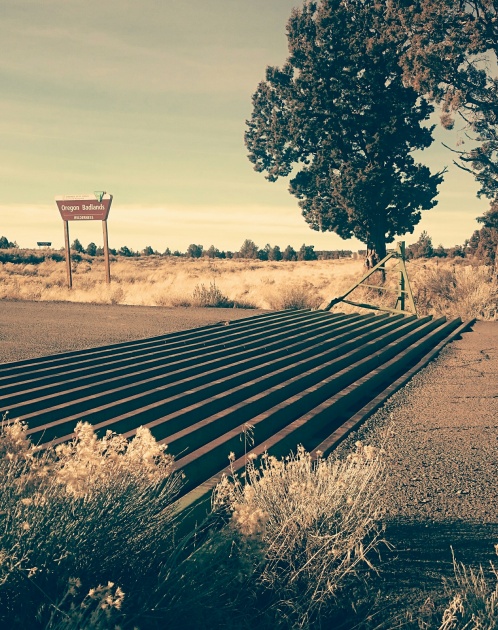
The land out here is vast, in some places stretching as far as the eye can see in between homes, towns, any signs of humanity. It is rugged and dry, and holds a sense of emptiness, of loneliness. But to the observant wanderer, it is in fact a place full of life, from the twisted juniper trees to the strange-colored lichens spreading over the ground. One can find traces of the animals that have passed through, coyote scat, rabbit tracks, the remnants of a cougar kill up in a tree, huge bird nests up in the craggy cliff bands. And, of course, the evidence of people, shotgun shells, broken glass, old appliances, and cows.
People seem to have a habit of taking what they have for granted until threatened with its loss. It is certainly true when it comes to land use. We have a long history of over-use, it is evident in any industry that involves using or extracting natural resources. It begins with discovery, then fortunes are made, and more and more people jump on board, and then, the resource begins to run out. That is the point at which people either destroy the resource altogether, or take steps to protect and manage it.
It is undeniable that humans impact the environment, our proliferation around the world has clearly changed the land. It is also undeniable that natural resources are required for our survival. We need food, water, shelter, just like every species. And this need, and all the times we’ve allowed it to devolve into excessive over-use of resources, along with the desire to protect what we don’t want to lose, has left us with a decades-old, emotional, sometimes violent debate.
Once again, this debate has exploded out of its usual confines of rural America and into the national spotlight with the occupation of the Malheur Wildlife refuge in Harney County. Ignoring the very basic fact that nature seeks balance, the media is frantically fueling the polarizing rhetoric. Either you are an angry, spoiled white guy with lots of guns attempting to grab all of the public land, or you are against the occupation and want the spoiled white guys arrested, maybe even bombed with drones. Few seem willing to pause long enough in the argument to really listen to each other. Just what is the beef with Federal land management?
The situation in Harney County presents a good starting place to look at this question because there is a long history of problems there. Anyone who has paid any attention to the story of the refuge occupation knows that it began with a protest rally in support of Dwight and Steven Hammond, who were sentenced for arson under the Anti-Terrorism and Effective Death Penalty Act for starting two fires on their land that spread to BLM land, burning a total of 140 acres. The group occupying the refuge want the Hammonds freed from prison, among other things. The Hammonds’ battle with the BLM has been going on for decades, long before they lit the two fires that got them branded as terrorist arsons. And they aren’t alone.
Read the whole thing,including embedded links here
Wednesday, January 6, 2016
Western States Move Forward with Potential Yellowstone-area Grizzly Hunts
Via Field & Stream
After 40 years of federal protection, grizzly bears may become fair game for hunters, as a handful of Western states push for the responsibility of managing the animals.
The Associated Press reports that a plan drafted by wildlife officials from the greater Yellowstone states of Wyoming, Idaho, and Montana estimates how many grizzly bears could be harvested while still maintaining viable populations if the species were no longer protected under the Endangered Species Act.
Though the proposal doesn’t specify the number of bears each state would permit to be harvested, it does specify a 19,300-square-mile management zone that includes the wilderness and national forests near the Yellowstone National Park. Further, the proposal allocates a 58-percent share of the permitted harvests to Wyoming—likely because it’s home to most of the region’s grizzlies—while Montana would get 34 percent and Idaho 8 percent.
Officials estimate that there are more than 700 grizzlies in the defined management zone, though biologists say that there are likely more living outside the borders, as the bears have expanded their range as their populations have grown.
In a December 4, 2015, joint letter to U.S. Fish and Wildlife Director Dan Ashe, the states’ wildlife directors urged the federal government to retract the bear’s threatened status. “It is critically important that we capitalize on our tremendous progress and momentum. . . by proceeding with a long overdue delisting,” the letter stated.
The last legal grizzly hunt in the Lower 48 was in the early 1970s, and a total of 58 bears were harvested in the five years leading to the species’ being listed as threatened, in 1975, as the AP notes. Since that time, the bear's numbers have rebounded. Opponents to the proposal, however, argue that it’s too soon to consider hunting as a management tool because grizzly populations are still too low.
Quentin Kujala, chief of wildlife management for Montana Fish, Wildlife, and Parks, says that the harvest quotas will likely be modest and on a sliding scale to help maintain viable bear populations and to avoid any chance of the species reverting back to federal protection. Hunting will be allowed if there were more than 675 bears, and it will be barred if the number drops to fewer than 600, Kujala said. Likewise, Wyoming Game and Fish spokesman Renny MacKay told the AP: “We’re definitely not talking about a large number. We’re not talking hundreds or anywhere near that.”
The Christian Science Monitor points out that tourism is a $1-billion industry in the greater Yellowstone area, and that, according to research, the park could lose $10 million without the potential of spotting bear near the roadside.
If the FWS removes grizzlies from federal protection and the states proceed with the plan, the proposition will need to undergo a public-comment period. The FWS is expected to make a decision on whether to release grizzlies from federal protection early this year, but barring any court
challenges, it could take up to a year for any rule changes to go into effect.
After 40 years of federal protection, grizzly bears may become fair game for hunters, as a handful of Western states push for the responsibility of managing the animals.
The Associated Press reports that a plan drafted by wildlife officials from the greater Yellowstone states of Wyoming, Idaho, and Montana estimates how many grizzly bears could be harvested while still maintaining viable populations if the species were no longer protected under the Endangered Species Act.
Though the proposal doesn’t specify the number of bears each state would permit to be harvested, it does specify a 19,300-square-mile management zone that includes the wilderness and national forests near the Yellowstone National Park. Further, the proposal allocates a 58-percent share of the permitted harvests to Wyoming—likely because it’s home to most of the region’s grizzlies—while Montana would get 34 percent and Idaho 8 percent.
Officials estimate that there are more than 700 grizzlies in the defined management zone, though biologists say that there are likely more living outside the borders, as the bears have expanded their range as their populations have grown.
In a December 4, 2015, joint letter to U.S. Fish and Wildlife Director Dan Ashe, the states’ wildlife directors urged the federal government to retract the bear’s threatened status. “It is critically important that we capitalize on our tremendous progress and momentum. . . by proceeding with a long overdue delisting,” the letter stated.
The last legal grizzly hunt in the Lower 48 was in the early 1970s, and a total of 58 bears were harvested in the five years leading to the species’ being listed as threatened, in 1975, as the AP notes. Since that time, the bear's numbers have rebounded. Opponents to the proposal, however, argue that it’s too soon to consider hunting as a management tool because grizzly populations are still too low.
Quentin Kujala, chief of wildlife management for Montana Fish, Wildlife, and Parks, says that the harvest quotas will likely be modest and on a sliding scale to help maintain viable bear populations and to avoid any chance of the species reverting back to federal protection. Hunting will be allowed if there were more than 675 bears, and it will be barred if the number drops to fewer than 600, Kujala said. Likewise, Wyoming Game and Fish spokesman Renny MacKay told the AP: “We’re definitely not talking about a large number. We’re not talking hundreds or anywhere near that.”
The Christian Science Monitor points out that tourism is a $1-billion industry in the greater Yellowstone area, and that, according to research, the park could lose $10 million without the potential of spotting bear near the roadside.
If the FWS removes grizzlies from federal protection and the states proceed with the plan, the proposition will need to undergo a public-comment period. The FWS is expected to make a decision on whether to release grizzlies from federal protection early this year, but barring any court
challenges, it could take up to a year for any rule changes to go into effect.
Tuesday, September 1, 2015
Bowhunting is Only a Month Away-Time to Up Your Practice and Get Blinds and Stands Set Up
Here in Ohio,bow season starts Sept.29th,other states have similar starting dates,most by mid Oct. at the latest.
Ohio deer seasons-
More info @ http://wildlife.ohiodnr.gov/hunting-trapping-and-shooting-sports/hunting-trapping-regulations/deer-hunting-regulations
W. Va deer seasons-
Archery-Sept 26th-Dec 31st
More info-
http://www.wvdnr.gov/Hunting/Regs1516/Deer_Season.pdf
Pa deer seasons-
DEER, ARCHERY (Antlered and Antlerless) WMUs 2B, 5C and 5D: Sept. 19- Nov. 28 and Dec. 26-Jan. 23, 2016. One antlerless deer with each required antlerless license. One antlered deer per hunting license year.
DEER, ARCHERY (Antlered and Antlerless) Statewide: Oct. 3-Nov. 14 and Dec. 26-Jan. 9. One antlered deer per hunting license year. One antlerless deer with each required antlerless license.
More info @ http://www.portal.state.pa.us/portal/server.pt?open=514&objID=576240&mode=2
*Archery: Oct. 1 – Nov. 14 and Dec. 1 – Jan. 1
More info @ http://www.michigan.gov/dnr/0,4570,7-153-10363-312005–,00.html
Kentucky deer seasons-

More info @ http://fw.ky.gov/Hunt/Pages/Deer-Hunting-Zones-and-Seasons.aspx
Indiana deer seasons-
More info @ http://www.eregulations.com/indiana/hunting/deer-seasons-licenses-equipment/
That covers Ohio and surrounding states. The rest of the country has similar hunting seasons-some start earlier,some start later-but they all start in the fall. You should have your blind/stand locations scouted out,shooting lanes cut,and your trail in and out raked clear of leaves,sticks,branches,etc. with any overhanging branches trimmed,along with any low branches from small trees,and briars and berry bushes that protrude onto the trail cut off at ground level.
Save all that stuff you trim to brush in your blind or stand. If it’s legal in your state-put out fresh mineral blocks and salt blocks now.
Increase the number of arrows you shoot each day,because as the season starts,you’ll be in the woods,and not practicing as much. I shoot a minimum of 6 groups of 6 arrows a day now,and at least 3 days a week,I shoot 12 groups of 6 arrows-6 in the morning,6 in the evening. At least 2 days a week,I shoot my 6 groups of arrows at last legal shooting light-(half hour after sunset here) Everyone needs to do this-because if there’s any issues with your sights – it’s better to find out now,and have time to fix the problem than it is to find out when you draw your bow on that big buck-and you can’t see shit.
If you hunt private land,and can get your stand/blind set up now-set it up-that way the deer get used to it,and don’t see it as a threat.
If you use trail cameras-you should have had them up in July. If you don’t have them up-get ’em up now.
I know I bring this up a lot-but until more deer hunters get it-the deer herds will continue to shrink many areas-
Shoot every coyote you see-more ‘yotes= fewer deer,in some areas,fawn predation is as high as 90%. That means the ‘yotes are killing 9 out of every 120 fawns born. Shoot the damn things-they’re not native to the eastern U.S.-they are an invasive species-plus eastern ‘yotes have a considerable amount of wolf DNA that they picked upon their way east in Minnesota,Wisconsin,the U.P.of Michigan,and parts of Ontario.
The second problem animal affecting whitetail deer are feral hogs-they eat the same foods as the deer,and while deer can have twins,even triplets,hogs can have 3 litters of 6-8 piglets-(sometimes up to 10 per litter)- per year,sometimes 4. The only way to remove a feral hog family-called a sounder-is to kill or trap every single one of them.If you leave just two,a boar and a sow-within a year,there will be 60-100 hogs in the same area,as the piglets from the first litter will be able to breed and have piglets within 6 months.
The sounders are territorial,so if you take one out-it will be at least a year before another moves in.
Feral hogs have been around from the Carolinas to Florida,and Florida to Texas along the gulf coast since the Spanish explorers in the 1500’s released pigs in every new place they came to,because the pigs could fend for themselves,and be hunted for food when needed.
It’s impossible to eliminate feral hogs from the southeast,but it is possible to remove them from the surrounding states where they are a problem. The best the southeast can hope for is to limit the billions in crop damage by removing individual sounders.
Unless you want to see the deer herd in your are crash-start killin ‘yotes and feral hogs-remember-you gotta get the whole sounder-all of ’em- to get rid of the hogs.
Get out in the woods.
Read.
Learn.
Train.
Do more PT !
Ohio deer seasons-
White-tailed Deer Hunting
| Species | Opening Date | Closing Date | Daily Bag Limit | |||
|---|---|---|---|---|---|---|
| Archery | September 26, 2015 | February 7, 2016 | Refer to the Deer Hunting Section for details on zone and bag limits. | |||
| Gun |
November 30, 2015 | December 6, 2015 | ||||
| December 28, 2015 | December 29, 2015 | |||||
| Muzzleloader |
January 9, 2016 | January12,2016 | ||||
W. Va deer seasons-
Archery-Sept 26th-Dec 31st
More info-
http://www.wvdnr.gov/Hunting/Regs1516/Deer_Season.pdf
Pa deer seasons-
DEER, ARCHERY (Antlered and Antlerless) WMUs 2B, 5C and 5D: Sept. 19- Nov. 28 and Dec. 26-Jan. 23, 2016. One antlerless deer with each required antlerless license. One antlered deer per hunting license year.
DEER, ARCHERY (Antlered and Antlerless) Statewide: Oct. 3-Nov. 14 and Dec. 26-Jan. 9. One antlered deer per hunting license year. One antlerless deer with each required antlerless license.
More info @ http://www.portal.state.pa.us/portal/server.pt?open=514&objID=576240&mode=2
- don’t forget-Pa has elk hunting!
*Archery: Oct. 1 – Nov. 14 and Dec. 1 – Jan. 1
More info @ http://www.michigan.gov/dnr/0,4570,7-153-10363-312005–,00.html
Kentucky deer seasons-
More info @ http://fw.ky.gov/Hunt/Pages/Deer-Hunting-Zones-and-Seasons.aspx
Indiana deer seasons-
|
Archery Season – Oct. 1, 2015 – Jan. 3, 2016
|
2 antlerless deer OR 1 antlered and 1 antlerless deer (AND bonus antlerless county quota)
|
|||||||
That covers Ohio and surrounding states. The rest of the country has similar hunting seasons-some start earlier,some start later-but they all start in the fall. You should have your blind/stand locations scouted out,shooting lanes cut,and your trail in and out raked clear of leaves,sticks,branches,etc. with any overhanging branches trimmed,along with any low branches from small trees,and briars and berry bushes that protrude onto the trail cut off at ground level.
Save all that stuff you trim to brush in your blind or stand. If it’s legal in your state-put out fresh mineral blocks and salt blocks now.
Increase the number of arrows you shoot each day,because as the season starts,you’ll be in the woods,and not practicing as much. I shoot a minimum of 6 groups of 6 arrows a day now,and at least 3 days a week,I shoot 12 groups of 6 arrows-6 in the morning,6 in the evening. At least 2 days a week,I shoot my 6 groups of arrows at last legal shooting light-(half hour after sunset here) Everyone needs to do this-because if there’s any issues with your sights – it’s better to find out now,and have time to fix the problem than it is to find out when you draw your bow on that big buck-and you can’t see shit.
If you hunt private land,and can get your stand/blind set up now-set it up-that way the deer get used to it,and don’t see it as a threat.
If you use trail cameras-you should have had them up in July. If you don’t have them up-get ’em up now.
I know I bring this up a lot-but until more deer hunters get it-the deer herds will continue to shrink many areas-
Shoot every coyote you see-more ‘yotes= fewer deer,in some areas,fawn predation is as high as 90%. That means the ‘yotes are killing 9 out of every 120 fawns born. Shoot the damn things-they’re not native to the eastern U.S.-they are an invasive species-plus eastern ‘yotes have a considerable amount of wolf DNA that they picked upon their way east in Minnesota,Wisconsin,the U.P.of Michigan,and parts of Ontario.
The second problem animal affecting whitetail deer are feral hogs-they eat the same foods as the deer,and while deer can have twins,even triplets,hogs can have 3 litters of 6-8 piglets-(sometimes up to 10 per litter)- per year,sometimes 4. The only way to remove a feral hog family-called a sounder-is to kill or trap every single one of them.If you leave just two,a boar and a sow-within a year,there will be 60-100 hogs in the same area,as the piglets from the first litter will be able to breed and have piglets within 6 months.
The sounders are territorial,so if you take one out-it will be at least a year before another moves in.
Feral hogs have been around from the Carolinas to Florida,and Florida to Texas along the gulf coast since the Spanish explorers in the 1500’s released pigs in every new place they came to,because the pigs could fend for themselves,and be hunted for food when needed.
It’s impossible to eliminate feral hogs from the southeast,but it is possible to remove them from the surrounding states where they are a problem. The best the southeast can hope for is to limit the billions in crop damage by removing individual sounders.
Unless you want to see the deer herd in your are crash-start killin ‘yotes and feral hogs-remember-you gotta get the whole sounder-all of ’em- to get rid of the hogs.
Get out in the woods.
Read.
Learn.
Train.
Do more PT !
Thursday, June 4, 2015
Science, policy, and the fate of the greater sage-grouse
Few species are currently receiving more attention from scientists, managers, legislators, and reporters than the greater sage-grouse (Centrocercus urophasianus). Once numbering in the millions and spanning 13 US states and three Canadian provinces, sage-grouse are now extirpated in two states and one province and have lost 44% of their original range.
In the mid-1990s, biologists became increasingly concerned about declining populations and the loss and deteriorating conditions of remaining sagebrush (Artemisia spp) ecosystems. At that time, however, it was determined that the species did not meet requirements for listing under the Endangered Species Act (ESA). Years later, in 2010 – after litigation, a “not warranted” decision in 2005, and more litigation – the US Fish and Wildlife Service (USFWS) concluded that the sage-grouse did warrant ESA protection. The USFWS is under court order to finalize a decision by 30 September 2015.
What has followed is an unprecedented effort among federal and state agencies, private landowners,
and numerous other stakeholders to conserve sage-grouse across more than 480 000 km2 of sagebrush habitat. However, the looming deadline has not been without controversy. As predictable as the Sun rising in the east, lawyers, lobbyists, and consultants hired by industry and others began questioning the science underlying the threats to sage-grouse, conservation objectives, and management recommendations that the USFWS will use in making their final decision. A few unpublished reports have emerged, attacking studies, peer-review processes, and scientists, questioning their objectivity and calling researchers an “insular group of scientist–advocates who deviate from providing credible, accurate scientific data to advancing policies they personally support”. This characterization is a case of the proverbial “pot calling the kettle black”.
These unpublished, non-peer-reviewed reports serve as the foundation for a lawsuit, filed in March 2015, by numerous western counties and industry-oriented plaintiffs claiming violation of the Data Quality Act of 2001. The fate of that lawsuit has yet to be determined, but the stage is set for another round of court battles that will decide whose science is most defensible.
At the heart of the scientific argument lies uncertainty and discord on how many sage-grouse there
actually are, causal factors affecting their decline, and what is needed to offset extirpation and habitat
loss and degradation. Annual counts of males at breeding sites (leks) are used as an index to determine population trends.
Imperfect methodology and sampling effort, questionable extrapolation of male-driven indices to derive population estimates, and difficulty in attributing these data to any one threat (eg energy development) have fueled the criticism. Without exception, all field studies on sage-grouse include assumptions and limitations, and some even have flaws, but the weight of evidence regarding threats to sage-grouse and sagebrush ecosystems cannot be denied. One need look no further than current and projected habitat changes from development as well as losses associated with invasive plant species and fire to realize what that evidence shows.
Debate among scientists is fundamental for the advancement of science and policies derived from its
findings. But the current debate over sage-grouse seems anything but scientific. Opponents of change
seem more interested in casting doubt and discrediting the facts than they are in healthy scientific
debate. History is replete with examples where professionals attempt to demonstrate that science is clear on an issue and immediate action is needed to avoid potentially dire consequences – only to be confronted by other “science” or “scientists” trying to show that the existing information is incomplete or unclear.
As with our justice system, it only takes “reasonable doubt” to convince many that the science does not justify needed change and action. Indeed, what is the land manager or decision maker to do when everyone comes to the table with their own scientists, to contend that their particular way of doing business is not a threat?
As the court-ordered September 2015 deadline approaches, one thing is certain: the courts will decide
the fate of sage-grouse, regardless of what the USFWS decides. Existing science will continue to be questioned,
perhaps with valid criticism but probably not with credible, published data supporting counter
positions. This has become the “state of play” for contentious ecological issues and especially those
requiring some stakeholders to change their practices. Science has been lost in the political and legal vortex that now plays out in social media and does not translate to a general public increasingly losing interest in the natural world. This scenario demonstrates why scientists must ensure that their work will pass both peer and legal scrutiny and can be messaged in a way that captures the public’s attention when the “next sage-grouse” comes along – and it surely will.
In the mid-1990s, biologists became increasingly concerned about declining populations and the loss and deteriorating conditions of remaining sagebrush (Artemisia spp) ecosystems. At that time, however, it was determined that the species did not meet requirements for listing under the Endangered Species Act (ESA). Years later, in 2010 – after litigation, a “not warranted” decision in 2005, and more litigation – the US Fish and Wildlife Service (USFWS) concluded that the sage-grouse did warrant ESA protection. The USFWS is under court order to finalize a decision by 30 September 2015.
What has followed is an unprecedented effort among federal and state agencies, private landowners,
and numerous other stakeholders to conserve sage-grouse across more than 480 000 km2 of sagebrush habitat. However, the looming deadline has not been without controversy. As predictable as the Sun rising in the east, lawyers, lobbyists, and consultants hired by industry and others began questioning the science underlying the threats to sage-grouse, conservation objectives, and management recommendations that the USFWS will use in making their final decision. A few unpublished reports have emerged, attacking studies, peer-review processes, and scientists, questioning their objectivity and calling researchers an “insular group of scientist–advocates who deviate from providing credible, accurate scientific data to advancing policies they personally support”. This characterization is a case of the proverbial “pot calling the kettle black”.
These unpublished, non-peer-reviewed reports serve as the foundation for a lawsuit, filed in March 2015, by numerous western counties and industry-oriented plaintiffs claiming violation of the Data Quality Act of 2001. The fate of that lawsuit has yet to be determined, but the stage is set for another round of court battles that will decide whose science is most defensible.
At the heart of the scientific argument lies uncertainty and discord on how many sage-grouse there
actually are, causal factors affecting their decline, and what is needed to offset extirpation and habitat
loss and degradation. Annual counts of males at breeding sites (leks) are used as an index to determine population trends.
Imperfect methodology and sampling effort, questionable extrapolation of male-driven indices to derive population estimates, and difficulty in attributing these data to any one threat (eg energy development) have fueled the criticism. Without exception, all field studies on sage-grouse include assumptions and limitations, and some even have flaws, but the weight of evidence regarding threats to sage-grouse and sagebrush ecosystems cannot be denied. One need look no further than current and projected habitat changes from development as well as losses associated with invasive plant species and fire to realize what that evidence shows.
Debate among scientists is fundamental for the advancement of science and policies derived from its
findings. But the current debate over sage-grouse seems anything but scientific. Opponents of change
seem more interested in casting doubt and discrediting the facts than they are in healthy scientific
debate. History is replete with examples where professionals attempt to demonstrate that science is clear on an issue and immediate action is needed to avoid potentially dire consequences – only to be confronted by other “science” or “scientists” trying to show that the existing information is incomplete or unclear.
As with our justice system, it only takes “reasonable doubt” to convince many that the science does not justify needed change and action. Indeed, what is the land manager or decision maker to do when everyone comes to the table with their own scientists, to contend that their particular way of doing business is not a threat?
As the court-ordered September 2015 deadline approaches, one thing is certain: the courts will decide
the fate of sage-grouse, regardless of what the USFWS decides. Existing science will continue to be questioned,
perhaps with valid criticism but probably not with credible, published data supporting counter
positions. This has become the “state of play” for contentious ecological issues and especially those
requiring some stakeholders to change their practices. Science has been lost in the political and legal vortex that now plays out in social media and does not translate to a general public increasingly losing interest in the natural world. This scenario demonstrates why scientists must ensure that their work will pass both peer and legal scrutiny and can be messaged in a way that captures the public’s attention when the “next sage-grouse” comes along – and it surely will.
Good Call: New Conservation Reserve Program Acres Will Enhance Duck Habitat in a Big Way
Agriculture Secretary Tom Vilsack announced that an additional 800,000 acres will be eligible for enrollment in the Conservation Reserve Program (CRP),
a Farm Bill initiative that has allowed agriculture producers to
voluntarily conserve environmentally sensitive land—including prime
wildlife habitat—for 30 years. Vilsack revealed this big boost to CRP,
which he called “one of most successful conservation programs in the
history of the country,” during his remarks to hunters and
conservationists at the Ducks Unlimited National Convention in Milwaukee, Wis.
 The backdrop is fitting, since 300,000 of these additional acres will
be devoted to lands with duck nesting habitat, potentially doubling CRP
acres that can benefit ducks in the future. The remaining acres will be
split: 100,000 to wetland restoration initiatives and 400,000 to state
acres for wildlife enhancement (SAFE)—all good news for sportsmen. For
its part, Ducks Unlimited was recognized by Vilsack for leading three
separate USDA projects resulting in an overall investment of $25.8
million in conservation efforts across the country.
The backdrop is fitting, since 300,000 of these additional acres will
be devoted to lands with duck nesting habitat, potentially doubling CRP
acres that can benefit ducks in the future. The remaining acres will be
split: 100,000 to wetland restoration initiatives and 400,000 to state
acres for wildlife enhancement (SAFE)—all good news for sportsmen. For
its part, Ducks Unlimited was recognized by Vilsack for leading three
separate USDA projects resulting in an overall investment of $25.8
million in conservation efforts across the country.
Vilsack also announced that a general sign-up period would begin in December 2015 to get the ball rolling on CRP enrollment, to which supporters of the program are saying, It’s about time. There hasn’t been a general sign-up since 2013, and more than 15 months after passage of the 2014 Farm Bill, regulation of CRP has been lacking. Enrollment was 1.7 million acres below the prescribed enrollment cap as of April 2015, with contracts for an additional 1.9 million acres set to expire on September 30.
The TRCP has been working closely with our partners in the sportsmen’s and wildlife community, USDA, and Congress to advance many aspects of the program that were addressed by Vilsack’s remarks today. Our Agriculture and Wildlife Working Group galvanized the 12 Senators who sent this letter to the Secretary, calling for a general sign-up to support full enrollment of CRP. And we’re very eager to see USDA complete implementation of the program, including the delayed rollout of a new CRP working grasslands enrollment option, which the department has said to expect later this summer.
For a program that, in just three decades, has grown to 32 times its original acreage and continues to facilitate on-the-ground conservation that strengthens rural economies, we’re expecting great things from CRP. With proper support, this important program can flourish like the wildlife and habitat it benefits.
Source-
http://blog.trcp.org/2015/05/29/good-call-new-conservation-reserve-program-acres-will-enhance-duck-habitat-in-a-big-way/

Image courtesy of Texas Parks and Wildlife Department.
Vilsack also announced that a general sign-up period would begin in December 2015 to get the ball rolling on CRP enrollment, to which supporters of the program are saying, It’s about time. There hasn’t been a general sign-up since 2013, and more than 15 months after passage of the 2014 Farm Bill, regulation of CRP has been lacking. Enrollment was 1.7 million acres below the prescribed enrollment cap as of April 2015, with contracts for an additional 1.9 million acres set to expire on September 30.
The TRCP has been working closely with our partners in the sportsmen’s and wildlife community, USDA, and Congress to advance many aspects of the program that were addressed by Vilsack’s remarks today. Our Agriculture and Wildlife Working Group galvanized the 12 Senators who sent this letter to the Secretary, calling for a general sign-up to support full enrollment of CRP. And we’re very eager to see USDA complete implementation of the program, including the delayed rollout of a new CRP working grasslands enrollment option, which the department has said to expect later this summer.
For a program that, in just three decades, has grown to 32 times its original acreage and continues to facilitate on-the-ground conservation that strengthens rural economies, we’re expecting great things from CRP. With proper support, this important program can flourish like the wildlife and habitat it benefits.
Source-
http://blog.trcp.org/2015/05/29/good-call-new-conservation-reserve-program-acres-will-enhance-duck-habitat-in-a-big-way/
Subscribe to:
Comments (Atom)