Showing posts with label coyotes. Show all posts

Sunday, November 1, 2015

Humans have created a new top predator that is taking over the Northeast

Humans are not newcomers when it comes to messing around with nature. While we haven't created Frankenstein's monster yet, what we do transforms the natural world.
One recent example is the creation of the coywolf — a hybrid of the coyote and the wolf that is also known as the Eastern coyote. According to a new article from The Economist, their population seems to have reached more than a million.


These animals have a completely new genetic makeup: Their genes are about one-quarter wolf DNA and two-thirds coyote DNA; the rest is from domesticated dogs. A 2013 study suggests this dog DNA is mostly from a few specific breeds, including German Shepherds and Doberman Pincers.
Human activity likely played a role in the species' creation. As humans cut down wolves' forest homes and hunted down their populations, the lack of available partners for wolves led them to search elsewhere for mates, leading them to coyotes and dogs.
Scientists think this intermixing began with wild wolves in southern Ontario about a century or two ago.
19020659228_39049c7ba9_oCharles Moreau PhotographyCharles Moreau caught this coywolf pup in Alberta, Canada.
The coywolves' success is astounding scientists. According to The Economist:
The animal’s range has encompassed America’s entire north-east, urban areas included, for at least a decade, and is continuing to expand in the south-east following coywolves’ arrival there half a century ago. This is astonishing. Purebred coyotes never managed to establish themselves east of the prairies. Wolves were killed off in eastern forests long ago. But by combining their DNA, the two have given rise to an animal that is able to spread into a vast and otherwise uninhabitable territory.

Read the rest Here

Wednesday, September 2, 2015

Illinois and New Jersey Wildlife Officials Warn of EHD Outbreaks in Deer

There have been EHD outbreaks in Ohio recently as well, usually in dry summers,the outbreaks can decimate local deer populations,as the 2012 outbreaks did in northern Summit and SE Geauga counties. I was talking to a couple of ODNR game wardens in 2012 at the Ladue public hunting area,and they told me they had counted 30 dead deer along a 1 mile section of the Cuyahoga river,farmers in the area that I talked to told me they had dead deer all around the streams and ponds on their farms in 2012. The deer numbers around the Ladue public hunting area appear to be back up-according to a friend who lives next to part of the hunting area.
The Summit county outbreak was in the area around our home.The deer populations are just now getting back to near where they were,northern Summit county deer are having a harder time gaining numbers due to coyote predation,with high ‘yote numbers,and very little private land on which to hunt or trap ‘yotes.

From Illinois and NJ-

The New Jersey Department of Environmental Protection’s Division of Fish and Wildlife is asking the public to be aware of any white-tailed deer that may be affected by Epizootic Hemorrhagic Disease, or EHD, and to report any suspected instances since outbreaks typically begin in August.
Although EHD is not a public health issue, it is the most important viral disease that affects white-tail deer in the United States according to the
Southeastern Cooperative Wildlife Disease Study at the University of Georgia.
The New Jersey Division of Fish and Wildlife reports that the state has experienced seven outbreaks of the disease since 1955. The virus is transmitted by a type of biting fly, commonly known as a biting midge, but have also been called sand gnats, sand flies, no-see-ums, or punkies.
The last outbreak of the disease in Sussex County came back in 1975, while parts of Morris and Warren Counties have had confirmed isolated cases of the virus show up in 2011 and 2012, respectively.
According to the University of Georgia, an easy lesion to spot where EHD could be expected is an erosion of the dental pad. Any deer with growth interruptions in their hooves or chronic lesions of the first part of the stomach, or rumen, by a hunter can suspect there was exposure to EHD.
The university noted that the geographic range of the disease year-by-year appears to be expanding. The division hopes that any deer exhibiting the symptoms of the disease will be reported to the Office of Fish and Wildlife Health and Forensics or the Bureau of Wildlife Management.
The signs of the disease this time of year are difficulty standing, drooling, foaming from the mouth or a carcass with no apparent wounds near water.
Another closely-related disease to EHD, named “Bluetongue,” or BT, was detected in deer for the first time in New Jersey last year. For New
Jerseyans and Sussex County natives, it is important to be aware of the disease because EHD can effect livestock, mostly cattle, while
Bluetongue is a disease of concern for all ruminant livestock, including sheep, goats, llamas and alpacas.
The public is not at risk to contract the disease and cannot be infected by handling infected deer, being bitten by infected midges or eating infected
deer meat, although the latter is strongly advised against. Dogs and cats are not susceptible to the disease either.
Unfortunately, there are no current strategies available to prevent or control EHD in the deer population. But, any livestock owners who believe their animals have been inflicted with the disease should contact a veterinarian for appropriate assistance.
Source
The Illinois Department of Natural Resources is asking Illinoisans to be on the lookout for signs of a disease fatal to deer.
According to IDNR, Epizootic Hemorrhagic Disease (EHD) is a virus that causes high fevers and kills deer hours of days after it’s contracted. Small insects called midges carry the disease and transfer it to deer by biting. Midges live and breed near water sources such as ponds, lakes, or creeks. Deer often contract the disease while drinking and die nearby.
The disease has no known effect to humans or domestic animals but can kill off localized deer populations in high numbers, according to wildlife ecologist Eric Schauber with Southern Illinois University Carbondale.
“It’s a big deal because we get these occasional periods and places where we can get these occasional periods and places where you can get fairly heavy mortality and it can kill off a substantial fraction of the population,” Schauber said.
Most cases are reported during drought years, Schauber said. He said there are several cases in the Southern region each year but most cases are reported in the central part of the state.
“In general, in terms of the Southern part of the state it doesn’t seem to have a big impact on the population as it potentially could in the central part of the state where the habitat is mostly along waterways,” Schauber said.
Schauber said deer that have contracted the virus often exhibit odd behavior such as walking aimlessly, having no fear of people, panting or sticking its tongue out, and having a swollen face or body.
The last major outbreak of EHD in Ill. was in 2012, according to IDNR. 51 counties had reports of deer being killed because of the virus.
The IDNR is asking anyone who thinks they may have spotted a deer infected with EHD to contact their local IDNR biologist or the Wildlife Disease and Invasive Species Program.
Source

Tuesday, September 1, 2015

Bowhunting is Only a Month Away-Time to Up Your Practice and Get Blinds and Stands Set Up

Here in Ohio,bow season starts Sept.29th,other states have similar starting dates,most by mid Oct. at the latest.
Ohio deer  seasons-

White-tailed Deer Hunting

Species Opening Date Closing Date Daily Bag Limit
Archery September 26, 2015 February 7, 2016 Refer to the Deer Hunting Section for details on zone and bag limits.
Gun
November 30, 2015 December 6, 2015
December 28, 2015 December 29, 2015
Muzzleloader
January 9, 2016 January12,2016
More info @  http://wildlife.ohiodnr.gov/hunting-trapping-and-shooting-sports/hunting-trapping-regulations/deer-hunting-regulations
W. Va deer seasons-
Archery-Sept 26th-Dec 31st
More info-
http://www.wvdnr.gov/Hunting/Regs1516/Deer_Season.pdf
Pa deer seasons-
DEER, ARCHERY (Antlered and Antlerless) WMUs 2B, 5C and 5D: Sept. 19- Nov. 28 and Dec. 26-Jan. 23, 2016. One antlerless deer with each required antlerless license. One antlered deer per hunting license year.
DEER, ARCHERY (Antlered and Antlerless) Statewide: Oct. 3-Nov. 14 and Dec. 26-Jan. 9. One antlered deer per hunting license year. One antlerless deer with each required antlerless license.
More info @ http://www.portal.state.pa.us/portal/server.pt?open=514&objID=576240&mode=2
  • don’t forget-Pa has elk hunting!
Michigan deer seasons-
*Archery: Oct. 1 – Nov. 14 and Dec. 1 – Jan. 1
More info @ http://www.michigan.gov/dnr/0,4570,7-153-10363-312005–,00.html
Kentucky deer seasons-

More info @ http://fw.ky.gov/Hunt/Pages/Deer-Hunting-Zones-and-Seasons.aspx
Indiana deer seasons-
Archery Season – Oct. 1, 2015 – Jan. 3, 2016
2 antlerless deer OR 1 antlered and 1 antlerless deer (AND bonus antlerless county quota)
More info @ http://www.eregulations.com/indiana/hunting/deer-seasons-licenses-equipment/
That covers Ohio and surrounding states. The rest of the country has similar hunting seasons-some start earlier,some start later-but they all start in the fall. You should have your blind/stand locations scouted out,shooting lanes cut,and your trail in and out raked clear of leaves,sticks,branches,etc. with any overhanging branches trimmed,along with any low branches from small trees,and briars and berry bushes that protrude onto the trail cut off at ground level.
Save all that stuff you trim to brush in your blind or stand. If it’s legal in your state-put out fresh mineral blocks and salt blocks now.
Increase the number of arrows you shoot each day,because as the season starts,you’ll be in the woods,and not practicing as much. I shoot a minimum of 6 groups of 6 arrows a day now,and at least 3 days a week,I shoot 12 groups of 6 arrows-6 in the morning,6 in the evening. At least 2 days a week,I shoot my 6 groups of arrows at last legal shooting light-(half hour after sunset here) Everyone needs to do this-because if there’s any issues with your sights – it’s better to find out now,and have time to fix the problem than it is to find out when you draw your bow on that big buck-and you can’t see shit.
If you hunt private land,and can get your stand/blind set up now-set it up-that way the deer get used to it,and don’t see it as a threat.
If you use trail cameras-you should have had them up in July. If you don’t have them up-get ’em up now.
I know I bring this up a lot-but until more deer hunters get it-the deer herds will continue to shrink many areas-
Shoot every coyote you see-more ‘yotes= fewer deer,in some areas,fawn predation is as high as 90%. That means the ‘yotes are killing 9 out of every 120 fawns born. Shoot the damn things-they’re not native to the eastern U.S.-they are an invasive species-plus eastern ‘yotes have a considerable amount of wolf DNA that they picked upon their way east in Minnesota,Wisconsin,the U.P.of Michigan,and parts of Ontario.
The second problem animal affecting whitetail deer are feral hogs-they eat the same foods as the deer,and while deer can have twins,even triplets,hogs can have 3 litters of 6-8 piglets-(sometimes up to 10 per litter)- per year,sometimes 4. The only way to remove a feral hog family-called a sounder-is to kill or trap every single one of them.If you leave just two,a boar and a sow-within a year,there will be 60-100 hogs in the same area,as the piglets from the first litter will be able to breed and have piglets within 6 months.
The sounders are territorial,so if you take one out-it will be at least a year before another moves in.
Feral hogs have been around from the Carolinas  to Florida,and Florida to Texas along the gulf coast since the Spanish explorers in the 1500’s released pigs in every new place they came to,because the pigs could fend for themselves,and be hunted for food when needed.
It’s impossible to eliminate feral hogs from the southeast,but it is possible to remove them from the surrounding states where they are a problem. The best the southeast can hope for is to limit the billions in crop damage by removing individual sounders.
Unless you want to see the deer herd in your are crash-start killin ‘yotes and feral hogs-remember-you gotta get the whole sounder-all of ’em- to get rid of the hogs.
Get out in the woods.
Read.
Learn.
Train.
Do more PT !

Wednesday, February 4, 2015

2014-2015 Ohio Deer Harvest Down More Than 15,000 Deer.

COLUMBUS, Ohio -- State officials say hunters checked more than 175,000 deer during Ohio's 2014-2015 deer hunting seasons.
The Ohio Department of Natural Resources says hunters checked 175,745 deer during all 2014-2015 hunting seasons.
The number of deer checked was down from more than 191,000 the previous season.
The state says the decreased number of deer reflects the effectiveness of deer management efforts. Bag limits were reduced in 46 counties prior to the 2014-2015 deer hunting season. Antlerless permits were eliminated in 29 counties.
Deer population goals will be revised this summer through a random survey of hunters and farmers.
The Ohio county that reported the most checked deer during the 2014-2015 seasons was Coshocton with more than 5,700.


15,255 fewer deer than the 2013-2014 deer season.
Combine the reduced harvest with coyote predation,and outbreaks of EHD in 2012 and 2013,and Ohio's deer herd is in far worse shape than ODNR claims.
Ohio's deer harvest has been dropping since the 2009-2010 season. Granted,deer were overpopulated in many parts of the state,but ODNR's efforts to reduce the size of the deer herd have more than succeeded,the herd has been reduced too much. Years of too many doe tags,the urban zones,where doe tags were valid all season,not just until the day before gun season,years of depredation permits being given to farmers,the 2012-13 EHD outbreaks,and increased fawn predation due to the exploding coyote population.
Unless ODNR stops the excessive doe harvest,and does a whole lot more to encourage hunters to reduce coyote numbers-deer hunting in Ohio is going to be like it was in the 70's,when you could hunt the entire week of gun season, not see a deer,and hear very few shots fired at deer.

  Many hunters also claim the electronic deer check,which can be done online,or by phone,even with a smartphone-has lead to more poaching.

 I don't believe that to be the case,data from a whole lot of other states that use the same procedures has shown no increase in poaching.
Poachers are going to poach deer no matter what the check-in procedure is,and ethical hunters-which is most of us- are going to check their deer in no matter what the procedure is.

What needs to happen is coyotes need to be aggressively hunted-the fewer coyotes there are-the more fawns that survive. Areas with high coyote populations have lower deer populations due to fawn predation,and the fact that eastern coyotes hunt in packs because they have a substantial amount of wolf DNA due to their interbreeding with wolves,which has been going on since at least the 1930's,and was first documented in Canadian coyote populations in Algonquin Provincial Park in  northen Ontario.

The coyotes we have in Ohio came here from Canada by traveling along the Appalachian mountains-then moving east,and from the UP of Michigan,along with Minnesota-then moving to the east. Both populations interbred with gray wolves along their way here.
So, we now have a coyote population that hunts in packs, and is capable of taking down adult deer,in Michigan,a small pack of 'yotes took down a horse.
Hunt these deer killing machines-while they rarely prey on adult deer,and their normal diet is smaller animals like rodents-squirrels,chipmunks,mice,rabbits,etc. - when there's a shortage of smaller animals-they will kill adult deer. In the spring,many coyote packs subsist mainly on deer fawns.
Studies have shown that fawn predation can be as high as 70% in areas with high 'yote populations.

Anyone who wants to see Ohio's deer herd recover needs to get out and start hunting 'yotes,from now,until the last fawns are dropped in late May/early June. Every 'yote killed is one more fawn that has a 90% better chance of growing up.Every 'yote not killed is a few more fawns that become coyote food.
Fur prices are stable,and up from last year,so coyote hunting will pay for itself.
Fewer coyotes = more deer.


Thursday, January 29, 2015

Michigan Coyotes Take Down Horse

And people think I’m making the shit up about coyotes killing adult deer,and being the reason for decline in deer herd numbers in multiple states…
The Lapeer County, Michigan Sheriff’s Mounted Unit announced on Sunday that one of their horses died as a result of a predatory coyote attack over the weekend. The horse’s owner, Lapeer County Sheriff Deputy Kallie Meyers, had been keeping the animal in a paddock near a barn on her property. On Sunday afternoon, a pack of five to six coyotes charged onto Meyers’ property and managed to bring the mare down before the owners were able to intervene by releasing their dogs on the predators.
Meyers’ dogs were eventually able to chase the pack off the property, but the horse’s injuries from the attack were too severe and it had to be put down.
“They came in the yard to get our horse,” Bruce Meyers wrote on Facebook. “Within 70 feet of the house. Our dogs went to help, managed to chase them off but one dog is chewed up, others have only a few scratches and minor punctures.”
It was not the first time that the predators have encroached upon the Meyers’ farm in Oxford Township. Kallie Meyers explained that coyotes have killed several farm animals on her property in the past.
Reports of coyotes attacking large animals in broad daylight are troubling to biologists. Coyotes are known for being shy around humans, and usually limit their hunts to smaller animals at night. In Michigan, it is legal to shoot or trap coyotes year-round on private property and there is no bag limit during regular seasons. Wildlife experts noted that humans and larger animals usually have very little to fear from coyotes.
Read the rest @  http://www.outdoorhub.com/news/2015/01/28/michigan-sheriff-deputys-horse-put-following-coyote-attack/
“Reports of coyotes attacking large animals in broad daylight are troubling to biologists.”
Really? The same biologists who have done studies that confirm eastern coyotes have a considerable amount of wolf DNA are now finding it “troubling” that packs of ‘yotes are killing large animals? I wonder how “troubling” they are going to find it when the population of our deer herds crash? Or when the first young child is attacked by a pack of ‘yotes?
I’ve made multiple posts asking deer hunters
to start shooting yotes,and letting them know that they will see fewer and fewer deer until the ‘yote population is seriously reduced. The only good thing I’ve noticed since the ‘yote population exploded in NE Ohio is that the feral cat population had been reduced-which is a plus-as NE Ohio deer have been found to be carrying the organism that causes toxoplasmosis-which can ONLY be spread by cat feces,less cat shit in the woods is always a plus,along with less of a chance of getting toxoplasmosis.
Since the wildlife biologists and the DNR/state fish and game agencies
in Michigan,Ohio,Illinois,Indiana,Pa,and W.Va. don’t seem to believe that the ‘yotes are the reason for the decline in deer numbers,and do not seem to believe that ‘yotes are killing up to 7 out of every 10 fawns in many areas-it’s up to deer hunters to get the ‘yote population under control.
Most states have either no limit or very liberal limits on the number of ‘yotes you can shoot.
Fur prices are up this year,so you can more than cover your expenses-including ammo,food and gas.
The fewer ‘yotes there are in May-the more fawns that survive-now’s the time to start reducing the ‘yote population-the state fish and game agencies ain’t gonna help do it-so anyone who wants to see the deer numbers stop the decline-get out there and start takin out ‘yotes-as many as possible.

Sunday, January 25, 2015

Another Good Reason to Hunt Coyotes

2015 Fur Price Outlook Not Bad After First Big Auction Results of the Year


2015 Fur Price Outlook Not Bad After First Big Auction Results of the Year

It was doom and gloom for trappers this time last year after the bottom fell out of the market.  Prices were rumored to be going back to basement levels of 20 years ago following the resurgence of the past couple of years.  Well, after the January 7th FHA auction, the prices were not that bad.
A lot of raccoon still went unsold, but the Eastern average was still over 10 dollars.  Muskrat averages stayed with coon prices with around a 10 dollar average as well. Red Fox did very well, with prices looking more like last years highs.
2015 Fur Price Outlook Not Bad After First Big Auction Results of the Year
The big story now is the resurgence of the coyote.  Even Eastern coyotes that were not much better than possum prices the past few years, are looking good.  Western coyotes are always in demand, but keep a close eye on their “uglier” Eastern cousins over the next few FHA ( Fur Harvesters of American ) and NAFA ( North American Fur Auctions ) auctions.
2015 Fur Price Outlook Not Bad After First Big Auction Results of the Year
So, the doom and gloom of the Chinese pullout of the fur market was much to do about nothing.  This was an off year for prices, but if things keep the way they are going and we get these unsold raccoons taken care of, then the market outlook for next year may not be half bad.
Here are the FHA Auction Results from January 7th

http://ohiooutdoorjournal.com/2015/01/25/2015-fur-price-outlook-bad-first-big-auction-results-year/

Friday, January 23, 2015

Another State That Has a Coyote Problem Has Low Deer Harvest

Preliminary harvest figures for the 2014-15 deer-hunting seasons in Illinois are down,  even from the collapse in harvest numbers in the 2013-14 seasons.
Here is the word from the Illinois Department of Natural Resources:
Illinois Deer Hunters Harvest Preliminary Total of 145,804 Deer during 2014-2015 Seasons
Deer Hunting Seasons Closed January 18
SPRINGFIELD, IL. – Hunters in Illinois harvested a preliminary total of 145,804 deer during all 2014-15 seasons, which concluded Jan. 18. The total preliminary deer harvest for all seasons of 145,804 compares with a total harvest for all seasons of 148,614 in 2013-14. During this year’s deer seasons, hunters took 47 percent does and 53 percent males.

http://chicago.suntimes.com/sports/7/71/313197/illinois-deer-hunting-harvest

Get out there and start shootin 'yotes,or there's gonna be even less deer next year !

Wednesday, January 21, 2015


Yes, it’s cold, bitterly so. But once a rutting coyote—or three—answers your call and runs into your spread, you won’t need those extra hand warmers in your pocket.

There’s been a killing. Like detectives investigating a crime scene, my hunting buddy Dominic Valpiani and I pan our flashlights as we try to piece the clues together: a flurry of wayward tracks in the immediate area; tangled in some nearby sagebrush, a small tuft of fur; a patch of snow splattered with blood. Something, likely a jackrabbit, was blindsided midmeal.
Valpiani laughs a little. “Suppose that rabbit should’ve done more zigging instead of zagging,” he says. Then he marks the spot on his GPS. This could be a good spot to set up on tomorrow’s hunt.
This is the third significant coyote sign we’ve encountered tonight in as many miles, and given the differences between tracks, multiple dogs are working this basin. We get back in the truck and continue scouting, hoping we’ll find even more.
Once we have a hunting strategy in place, Valpiani and I return to base camp—which we’d set up a few hours earlier in one of Idaho’s many sagebrush deserts—around midnight. We’d had grand plans for a winter campfire, but it’s easier to ignite the camper’s propane furnace and listen to the drone of the weather radio. Surprise: More cold is on the way.

The Coyote Rut


Dog Walk: A hunter heads back with a nice Montana coyote in tow. Photo by Brian Grossenbacher
Valpiani and I don’t have access to private land, and by this time of year public-land coyotes have caught on to hunters’ tactics. But February is their mating season—a time when even the smartest coyotes lose their senses.
Before our hunt, we used GPS and detailed maps to peruse public areas neighboring private land where coyotes often find shelter, security, and easy access to food. We avoid low basins where snowdrifts amass, and instead look for south-facing slopes with partially melted snow patches and coyote tracks either coming or going. We’re respectful of boundaries, but we also know that dogs harbored on the other side of a fence will surely hear our calls.
We set up as if we’re calling elk, with a caller 40 to 50 yards uphill and behind a shooter. The key is to keep the initial howls and barks short and abrupt so as not to sound like a dominant dog, which can scare some predators away.
Valpiani and I often follow up with the squealing sounds of a distressed critter. Male coyotes are almost as interested in food as they are in mating. If the sound of an inviting mate doesn’t bring them running, the sound of a companion with a bite to eat will. Coyotes are scavengers and territorial by nature, and by combining our calling, we’re doubling down on two instinctual coyote drivers at this time of year.
The predawn air is stinging cold when we reach our first spot. The vapor of each breath mists over my mustache and beard and freezes, anchoring every whisker like cement. I can barely talk. Even smiling hurts. Just as the first hints of daylight wash over the desert, I see a private fenceline 100 yards to our left and know we’re right where we want to be. The hunt begins when Valpiani breaks the silence with a series of short, subtle howls and barks.

http://www.fieldandstream.com/articles/hunting/2015/01/snow-dogs-hunting-the-coyote-rut?dom=fas&loc=todayonfas&lnk=snow-dogs-hunting-the-coyote-rut


Get out there and start shootin 'yotes-unless you want to see fewer and fewer deer where you deer hunt.
In some areas,fawn predation is as high as 70%-that's 7 out of every ten fawns born-70 out of every hundred-700 out of every thousand.
Get the picture? More 'yotes = fewer deer, fewer 'yotes = more deer.
Hunting 'yotes ain't easy,you have to make some effort-a lot of effort,it not only improves your shooting skills,it improves your blind set ups,your scent control,your camo,your calling,your blind placement and set up, your ability to hold perfectly still,and your ability to remain silent.

All of those things will make you a better deer hunter. besides that-it's almost the end of Jan,what else are you gonna do between now and late winter/early spring steelhead and late spring crappie fishing and turkey season?
Beats sitting in the house getting fat from sodas,snack food and beers-plus it's good exercise for you.
Aside from the shower curtain snow camo mentioned at the end of the article,you can use white sheets with a little black and grey spray paint and some driveway markers like the kind used by snowplow contractors to make a blind-so there ain't no big investment in gear.
So,now that you have no excuses-start whackin 'yotes-the furs will cover your ammo and gear costs,along with your gas money.

Ga. Study On Coyotes Aims To Help Deer Fawns Survive

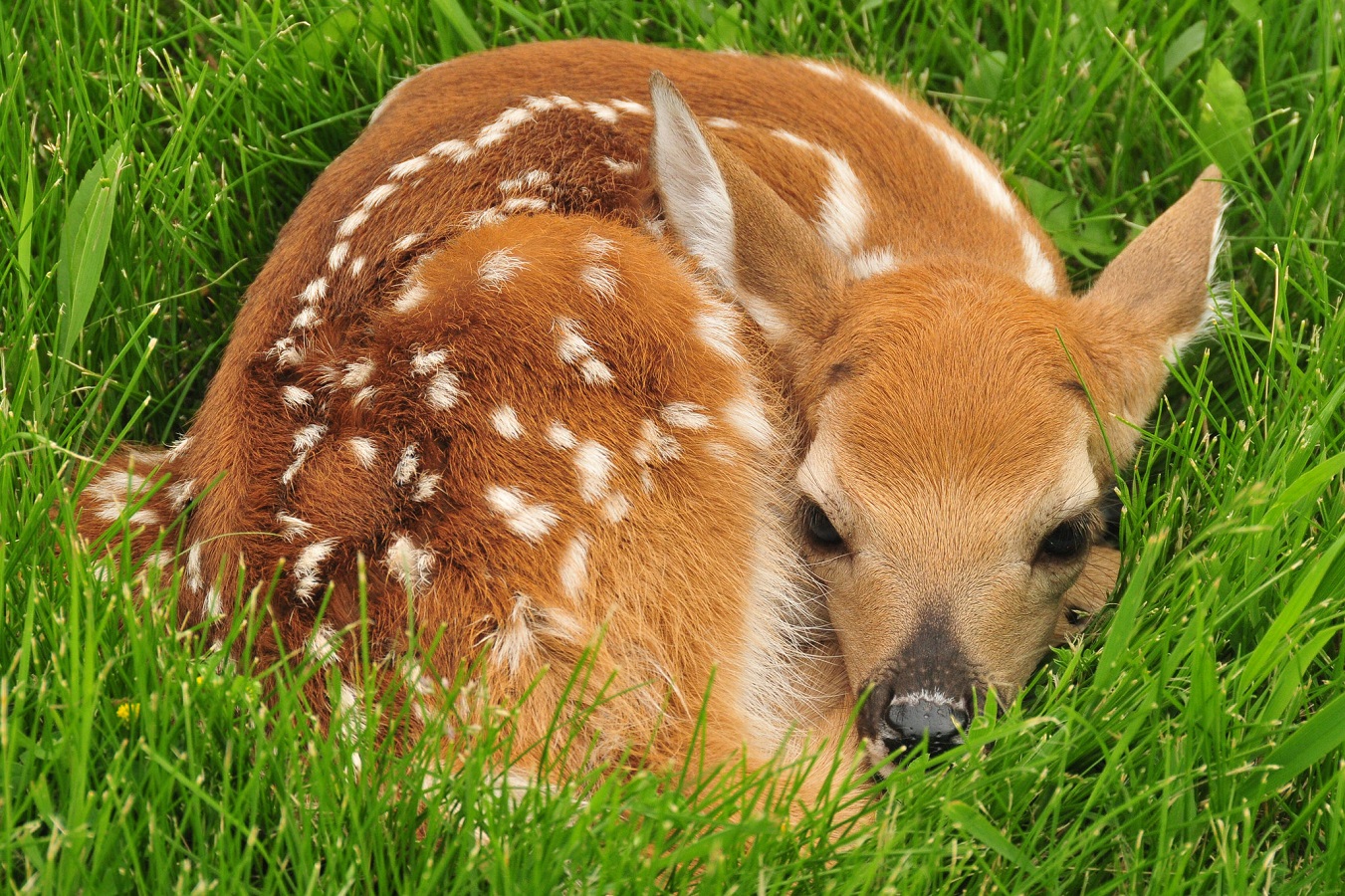
White-tailed deer fawns, by their youth and size, are an easy target for most coyotes.
Researchers in Georgia, Alabama and South Carolina hope to figure out how to protect the fawn, to some extent, by studying coyote behavior.
“We would potentially try to see if we could make alterations to the environment to change how coyotes are behaving thereby influencing the probability that they will prey on fawns,” says Dr. Michael Chamberlain, a professor of Wildlife Ecology at the University of Georgia.


Chamberlain says the coyotes are seriously threatening the fawns in the Southeast.  Starting next week, researchers will trap, tag and monitor the coyotes over the next two years throughout the three states.
Coyotes pose a serious threat to white-tailed deer fawns says Dr. Michael Chamberlain, a professor of Wildlife Ecology at the University of Georgia.
Credit USFWS Mountain-Prairie / Flickr.com/usfwsmtnprairie
“Ultimately can we take that information and manipulate the landscape to influence coyote behavior, thereby influencing their impacts on their prey,” says Chamberlain.
The coyotes will not be harmed during the trapping and tagging process.
DNA samples will also be studied to help determine colonization routes.

http://wabe.org/post/ga-study-coyotes-aims-help-deer-fawns-survive